Chestnut Meaning Slang: What Does Chestnut Mean in Text?
When I see the word “chestnut” in a text message, social media comment, or online joke, I might wonder whether it has a hidden meaning.
Chestnut usually refers to a type of nut or the tree that produces it, but the word can also have an informal meaning in everyday conversation.
People sometimes call an old joke, familiar story, or repeated remark a “chestnut.” I may also encounter the word when someone talks about hair color, horses, or popular sayings.
The meaning depends on the conversation, so I should not assume that every use of chestnut is internet slang.
In this guide, I’ll explain the chestnut meaning slang, show how people use it in realistic conversations, and help me understand when the word refers to a joke rather than its ordinary meaning.
Quick Answer:
In informal English, a “chestnut” can mean an old joke, familiar story, or remark that people have heard many times. The word is not a common texting abbreviation, and its meaning depends on context.
What Does Chestnut Mean in Slang?
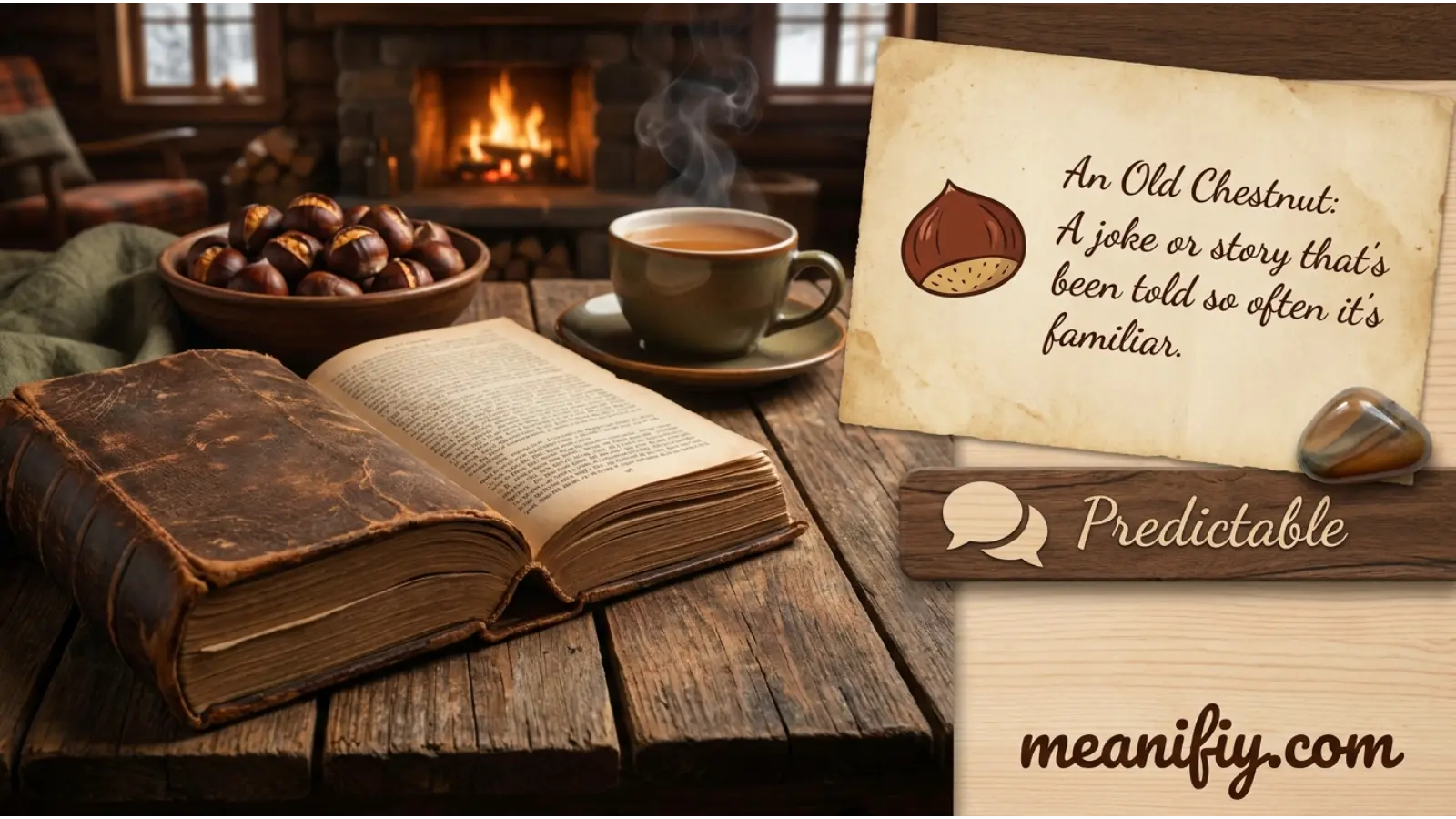
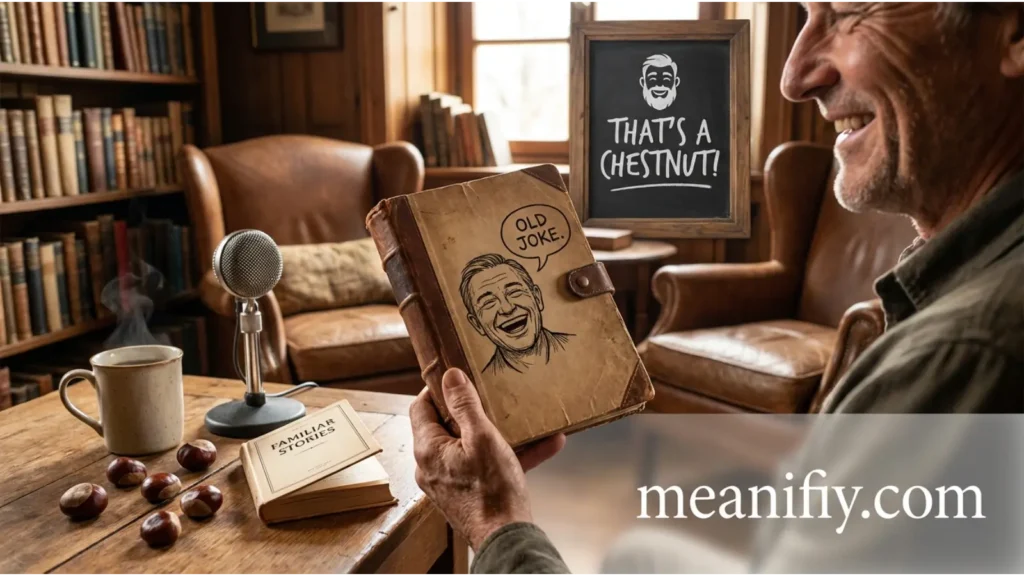
The word chestnut can refer to a joke, story, or saying that has been repeated so often that it feels familiar or predictable.
For example, if someone tells the same joke at every family gathering, another person might call it an old chestnut. The phrase often carries a playful or mildly critical tone, suggesting that the joke is no longer fresh.
People have used this expression in English for a long time. It is more traditional informal language than modern internet slang.
Example:
Person A: “Why did the chicken cross the road?”
Person B: “That’s an old chestnut!”
Meaning: Person B recognizes the joke as familiar and frequently repeated.
Different Meanings of Chestnut
Chestnut has several meanings, and the surrounding words usually make the intended meaning clear.
1. An Old Joke or Repeated Story
This is the meaning most relevant to slang searches. An “old chestnut” is a joke, story, argument, or remark that people have heard many times.
Where it is used: Casual conversations, comedy, writing, and discussions about familiar jokes.
Example: “His speech included the old chestnut about how money can’t buy happiness.”
Here, chestnut means a familiar saying or argument.
2. A Brown Color
Chestnut can describe a warm reddish-brown shade, especially when talking about hair, fabric, or other objects.
Where it is used: Fashion, beauty, hair-color descriptions, and everyday conversation.
Example:
Person A: “What color is your new hair dye?”
Person B: “It’s chestnut brown.”
Meaning: The person is describing a brown shade with warm reddish tones.
3. A Nut or Tree
A chestnut is also an edible nut produced by certain trees. People use the word when discussing food, cooking, gardening, or nature.
Example:
Person A: “What are you roasting?”
Person B: “Chestnuts for the holidays.”
Meaning: The conversation is about food, not slang.
4. A Horse’s Coat Color
In horse terminology, chestnut describes a reddish-brown coat color. It is a standard descriptive term in equestrian settings.
Example: “The rider arrived on a chestnut horse.”
Meaning: The horse has a reddish-brown coat.
These meanings are not equally common in every situation. In a conversation about jokes, “old chestnut” is likely intended; in a conversation about food or hair, the literal meaning is more likely.
How Is Chestnut Used in Text Messages?
People may use chestnut in messages when referring to an overused joke, a familiar excuse, or a story that someone keeps repeating.
Here are some realistic examples.
Example 1: An old joke
Person A: “Why was the math book sad? It had too many problems!”
Person B: “That’s an old chestnut 😂”
Meaning: The joke is familiar and not particularly original.
Example 2: A repeated excuse
Person A: “He says his alarm didn’t go off again.”
Person B: “That’s an old chestnut.”
Meaning: The excuse has been used so many times that the other person no longer finds it convincing or surprising.
Example 3: A familiar saying
Person A: “My dad keeps saying that history repeats itself.”
Person B: “That’s an old chestnut, but there’s some truth to it.”
Meaning: The saying is well known and frequently repeated.
Example 4: Talking about hair
Person A: “I’m thinking of changing my hair color.”
Person B: “Would you try chestnut brown?”
Meaning: Chestnut refers to a hair-color shade, not a joke.
What Does “Old Chestnut” Mean?
“Old chestnut” is the expression most closely associated with the informal meaning of the word.
It describes something familiar that has been repeated many times, especially a joke, story, or argument. The phrase can sound humorous, dismissive, or mildly critical depending on the speaker’s tone.
For example:
- “That joke is an old chestnut.” — The joke has been told many times.
- “Here comes the old chestnut about teenagers and their phones.” — The speaker expects a familiar complaint.
- “He brought up the old chestnut about hard work always paying off.” — The argument is well known and often repeated.
Calling something an old chestnut does not necessarily mean it is bad. A familiar joke can still be funny, and a repeated saying can still make a useful point.
Where Did the Slang Meaning Come From?
The expression “old chestnut” has a long history in English. It became associated with familiar jokes and stories that people repeat.
A frequently cited explanation connects the phrase with a nineteenth-century play, The Broken Sword, by William Dimond. In the play, a character repeatedly tells a story about a chestnut tree, and another character responds by pointing out that the story has already been told.
This account is often given as an explanation for the expression, although the full history of the phrase is more complicated than a single anecdote.
The important point is that the expression predates modern texting and social media. It is traditional English usage rather than a newly created internet abbreviation.
Is Chestnut Common Internet Slang?
Not especially. People can use the word online, but “old chestnut” is a traditional expression rather than a widely recognized abbreviation like LOL, TBH, or IMO.
I might see it in:
- Text messages discussing familiar jokes.
- Social media comments about repeated memes.
- Online discussions about tired arguments or common excuses.
- Reviews or conversations about comedy and storytelling.
Its use depends on the speaker and audience. Some people recognize the expression immediately, while others may be more familiar with phrases such as “old joke” or “same old story.”
Similar Words and Expressions
| Word or phrase | Meaning | Difference |
|---|---|---|
| Old chestnut | A familiar, frequently repeated joke or story | A traditional expression, often playful or critical. |
| Cliché | An idea or phrase used so often that it may feel unoriginal | Often describes overused language or ideas more broadly. |
| Dad joke | A simple, often predictable joke | Usually refers to a style of humor rather than any repeated saying. |
| Same old story | Something familiar that keeps happening | Often refers to a repeated situation or excuse. |
| Recycled joke | A joke reused instead of being created anew | Emphasizes that the joke has been reused. |
For example, a joke can be both a dad joke and an old chestnut. However, “old chestnut” can also describe a repeated argument or familiar story that is not a joke.
Common Misunderstandings About Chestnut
A few distinctions can help me interpret the word correctly.
- Chestnut does not always mean slang: It may refer to a nut, tree, color, or horse.
- An old chestnut is not necessarily a bad joke: It simply means that the joke or story is familiar.
- The word is not an acronym: Chestnut is a regular English word with several meanings.
- It is not exclusively used online: The expression existed long before social media.
- Context matters: If someone mentions chestnut brown hair, they are probably discussing color rather than an old joke.
Key Takeaways
- Chestnut can mean an old, frequently repeated joke or story in informal English.
- “Old chestnut” is the expression most closely linked to its slang meaning.
- Chestnut can also refer to a nut, tree, reddish-brown color, or horse’s coat.
- The expression has a long history in English and is not modern texting slang.
- The surrounding conversation helps identify the intended meaning.
Frequently Asked Questions
1. What does Chestnut Meaning Slang?
Chestnut can mean an old joke, familiar story, or repeated remark. People often use the phrase “old chestnut” when something has been heard many times.
2. What does “that’s an old chestnut” mean?
It means that a joke, story, or argument is familiar and has been repeated often. Depending on the tone, the phrase can sound amused or dismissive.
3. Is chestnut a bad word?
No. Chestnut is not generally a rude or offensive word. When used to describe an old joke, it may gently criticize the joke for being predictable.
4. What does chestnut mean on social media?
It may refer to an old joke, repeated meme, or familiar argument. However, it can also refer to the color or the nut itself.
5. Does chestnut mean brown hair?
It can. Chestnut brown describes a warm brown shade, often with reddish tones. This meaning is common in hair-color and fashion descriptions.
6. Is chestnut modern internet slang?
No. The expression “old chestnut” has been used in English for a long time. People may use it online, but it is not a modern abbreviation like LOL or TBH.
7. What is another word for an old chestnut?
Depending on the context, alternatives include “old joke,” “cliché,” “recycled joke,” or “same old story.” Each phrase has a slightly different meaning.
Conclusion
The chestnut meaning slang usually relates to an old joke, familiar story, or repeated saying, especially in the expression “old chestnut.” However, the word has several ordinary meanings, including a nut, a reddish-brown color, and a horse’s coat color.
If I see chestnut in a message, I should look at the surrounding words before deciding what the sender means. Understanding this traditional expression helps me recognize familiar jokes and repeated remarks without confusing them with modern internet slang.

Tayyab Hassan is a Master’s graduate, content writer, and contributor at Meanifiy.com. He specializes in creating informative, reader-friendly content that simplifies language, meanings, and educational topics. With a commitment to accuracy and clarity, he helps readers understand complex concepts through engaging and accessible articles.