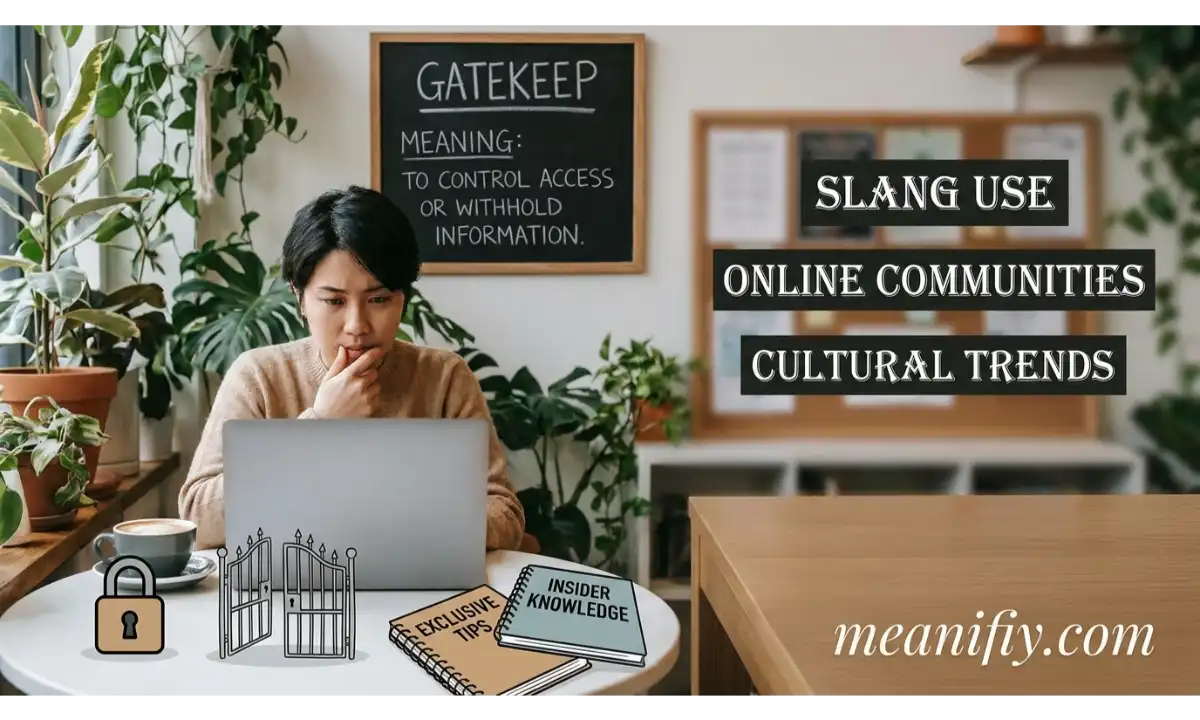
When I see someone write “Stop gatekeeping!” in a comment or text message, I might wonder what they mean. The gatekeep meaning slang usually refers to keeping information, recommendations, or access to something away from other people.
Someone might gatekeep a favorite song, a clothing brand, a makeup product, or even a good restaurant because they want to keep it exclusive. I often see this term in social media discussions, especially when people ask others to share the names of products, artists, or places they recommend.
Sometimes gatekeeping is about protecting privacy or setting boundaries, but online, it often describes someone who refuses to share something without a good reason. In this article, I’ll explain how people use gatekeep in texts and social media, show realistic examples, and help you understand when the word is playful, negative, or reasonable.
Quick Answer:
Gatekeep means controlling or limiting who gets access to information, knowledge, resources, or a community. In slang, it often describes someone who refuses to share a favorite song, product, place, or trend. The word can have a negative meaning online, but gatekeeping can also be reasonable when protecting privacy, safety, or personal boundaries.
What Does Gatekeep Mean in Slang?
In internet slang, gatekeep means keeping something to yourself instead of sharing it with others, especially when you could easily tell them about it.
People often use the word when someone wants to keep a discovery secret. For example, a person might find a small clothing brand they love and refuse to tell their friends its name. Someone else might respond, “Why are you gatekeeping?”
The term can also describe people who decide whether others are allowed to join a group, enjoy a hobby, or call themselves fans of something.
For example, an experienced gamer might tell a new player that they are not a “real gamer” because they have not played certain older games. This behavior can be called gatekeeping because the experienced player is setting unfair rules about who belongs.
The meaning depends on the situation. Keeping a personal secret is not automatically gatekeeping in the negative sense. The term usually carries criticism when someone unnecessarily withholds useful information or acts as though they control who deserves access.
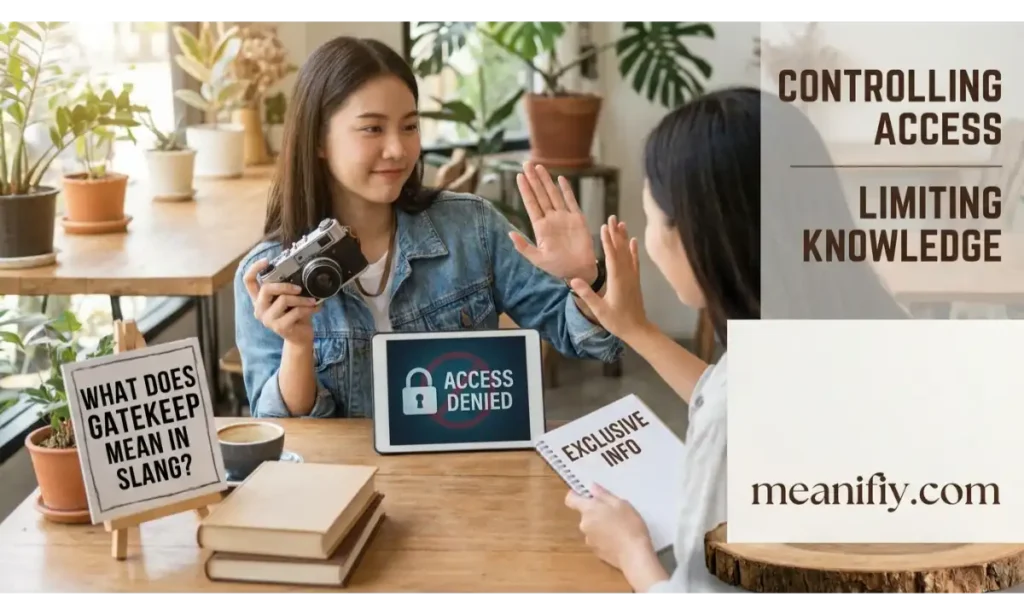
What Does Gatekeep Mean in Text Messages?
In texting, people use gatekeep to ask why someone is hiding information or refusing to share a recommendation.
Here are some realistic examples.
Example 1: Asking about a song
Person A: “This song is amazing. What’s it called?”
Person B: “I’m not telling anyone 😂”
Person A: “Girl, stop gatekeeping and send me the name!”
Meaning: Person A wants the song title and thinks Person B is unnecessarily keeping it secret.
Example 2: Talking about skincare
Person A: “Your skin looks so good. What moisturizer do you use?”
Person B: “It’s a secret.”
Person A: “Why are you gatekeeping the skincare routine?”
Meaning: Person A wants to know which product helped Person B.
Example 3: Sharing a restaurant recommendation
Person A: “Where did you get that burger?”
Person B: “I’m keeping this place to myself.”
Person A: “Don’t gatekeep! I need to try it.”
Meaning: Person A is jokingly asking for the restaurant’s name.
Example 4: Discussing a hobby
Person A: “You can’t be a real anime fan if you haven’t watched these ten shows.”
Person B: “Stop gatekeeping anime. People can enjoy different shows.”
Meaning: Person B objects to someone deciding who qualifies as a real fan.
These examples show that gatekeep can describe anything from playful secrecy to unfair exclusion.
How Is Gatekeep Used on Social Media?
Gatekeep is especially useful in online conversations about recommendations, trends, interests, and communities.
Gatekeeping on TikTok
On TikTok, users may call someone out for refusing to reveal a product, song, creator, or location featured in a video.
For example, someone might comment, “Drop the perfume name. Stop gatekeeping!”
The commenter wants the creator to share the product’s name instead of keeping it secret.
Gatekeeping on Instagram
On Instagram, the term may appear under beauty routines, fashion posts, restaurant recommendations, or travel photos.
A comment such as “She’s gatekeeping the best thrift store” suggests that someone is not revealing where they find their clothes.
Gatekeeping on Reddit and Discord
In online communities, gatekeeping often refers to excluding newcomers or judging whether they are knowledgeable enough to belong.
For example, an experienced player might dismiss beginners for not knowing every game mechanic. Other members may call this behavior gatekeeping.
Gatekeeping in Group Chats
Friends may use the term jokingly when someone refuses to share a favorite app, shopping website, or local food spot.
However, not every refusal to share is gatekeeping. People have the right to keep personal information private.
What Does “Stop Gatekeeping” Mean?
“Stop gatekeeping” is a direct request to stop withholding information or deciding who deserves access to something.
People often use it when they want someone to share a name, link, recommendation, or useful detail.
Examples include:
- “Stop gatekeeping the playlist!”
- “Please stop gatekeeping your favorite book recommendations.”
- “Why are you gatekeeping that clothing brand?”
- “Stop gatekeeping the recipe and share it with us!”
The phrase may sound playful between friends, but it can sound demanding if the information is private or the other person does not want to share it.
What Does Gatekeeping Mean in Different Contexts?
The word has related meanings beyond social media slang.
| Context | Meaning | Example |
|---|---|---|
| Music and entertainment | Refusing to share favorite artists, songs, or shows | “He’s gatekeeping his favorite band.” |
| Fashion and beauty | Keeping product names or shopping sources secret | “Stop gatekeeping that lipstick.” |
| Hobbies and fandoms | Deciding who counts as a genuine fan | “Don’t gatekeep gaming.” |
| Social groups | Limiting who is accepted into a community | “The group is gatekeeping new members.” |
| Work or education | Controlling access to information or opportunities | “One employee is gatekeeping important project details.” |
In workplace or educational settings, gatekeeping may have serious effects if someone uses their position to block others from resources or opportunities.
Still, some forms of access control are necessary. For example, limiting confidential files to authorized employees is responsible security, not automatically harmful gatekeeping.
Is Gatekeeping Always Bad?
No. The word often has a negative meaning in internet slang, but the behavior itself is not always wrong.
Unhelpful gatekeeping happens when someone unnecessarily excludes others, withholds useful information to feel superior, or creates unfair rules about who belongs.
For example, telling someone they cannot enjoy a music genre because they only know its popular songs is a form of unfair gatekeeping.
Reasonable boundaries are different. You are not required to share your private messages, personal contacts, passwords, or sensitive information.
For example, refusing to reveal a friend’s private address is not the same as refusing to name a publicly available song.
The important difference is whether someone is unfairly controlling access or simply protecting legitimate privacy and safety needs.
Where Did the Word Gatekeep Come From?
The word comes from the ordinary idea of a gatekeeper: someone who controls entry through a gate or access to a place, resource, or opportunity.
Over time, gatekeeping also became a common term for controlling access to information, social groups, and cultural interests. Its slang use grew through online discussions about fandoms, trends, products, and community behavior.
There is no single confirmed moment when the current internet slang meaning began. The modern usage builds on the older idea of controlling who gets in or what they can access.
Gatekeep vs. Gatekeeping vs. Gatekeeper
These forms are related, but they have different grammatical roles.
- Gatekeep: The action of withholding information or controlling access. Example: “Don’t gatekeep the name.”
- Gatekeeping: The behavior or practice itself. Example: “Gatekeeping makes new fans feel unwelcome.”
- Gatekeeper: The person who controls access. Example: “He’s acting like a gatekeeper.”
Understanding the difference helps you use the word naturally in conversations.
Similar Slang Terms
| Term | Meaning | Difference |
|---|---|---|
| Gatekeep | Control access or withhold information | Focuses on keeping something from others. |
| Flex | Show off something you have or can do | Focuses on displaying status, skill, or possessions. |
| Clout-chasing | Seeking attention or popularity | Focuses on gaining social recognition. |
| Exclude | Leave someone out | Focuses on preventing participation rather than necessarily hiding information. |
| Share | Give others access to information or something useful | Often describes the opposite of gatekeeping. |
These terms are not interchangeable. Someone can show off a product without gatekeeping it, and someone can exclude a person without hiding any information.
Common Misunderstandings About Gatekeep
- Gatekeeping is not always about products. It can involve hobbies, communities, knowledge, and opportunities.
- Keeping a secret is not automatically gatekeeping. Privacy and personal boundaries matter.
- The term does not always describe serious behavior. Friends often use it jokingly.
- Gatekeeping is not the same as having preferences. Saying you dislike a popular song does not mean you are gatekeeping music.
- You do not have to share everything. A person can decline to share private or sensitive information without acting unfairly.
Key Takeaways
- Gatekeep slang means controlling access or refusing to share information.
- People often use it for songs, products, places, trends, and hobbies.
- “Stop gatekeeping” means asking someone to stop keeping something secret or excluding others.
- The term often criticizes unfair exclusion, but privacy boundaries are different.
- Gatekeep is a verb, gatekeeping describes the behavior, and a gatekeeper is the person doing it.
Frequently Asked Questions
1. What does gatekeep mean in slang?
Gatekeep means keeping information, recommendations, or access to something from other people. Online, it often describes someone who refuses to share a favorite product, song, place, or interest.
2. What does gatekeeping mean on TikTok?
On TikTok, gatekeeping usually means refusing to reveal something featured in a video, such as a makeup product, clothing brand, song, or location. It can also mean making newcomers feel unwelcome in a community.
3. What does “stop gatekeeping” mean in text?
It means asking someone to stop hiding information or keeping a recommendation to themselves. The phrase may be playful or serious, depending on the conversation.
4. What does gatekeep mean when a girl or guy says it?
The meaning is generally the same regardless of gender. The person may be asking you to share information or criticizing you for excluding others. The word alone does not indicate romantic interest.
5. Is gatekeeping an insult?
It can be criticism, but it is not necessarily a personal insult. Someone may use it to point out behavior they consider unfair, secretive, or exclusionary.
6. Can gatekeeping be a good thing?
Sometimes, controlling access protects privacy, safety, or confidential information. However, people often use the slang term negatively when someone creates unnecessary barriers or unfairly excludes others.
7. What is an example of gatekeeping?
If someone refuses to name a popular song because they do not want others to discover it, a friend might say, “Stop gatekeeping and share the song!”
Conclusion
The gatekeep meaning slang is about controlling access, keeping information to yourself, or deciding who gets to participate in something. Online, people commonly use the term when someone refuses to share a favorite product, song, place, or hobby. It can also describe unfair behavior toward newcomers in a community. However, not every secret or boundary is gatekeeping in a negative sense. When I see the word in a text or social media comment, I should consider what is being withheld and why. That context helps me understand whether the person is joking, criticizing unfair exclusion, or simply protecting their privacy.

Tayyab Hassan is a Master’s graduate, content writer, and contributor at Meanifiy.com. He specializes in creating informative, reader-friendly content that simplifies language, meanings, and educational topics. With a commitment to accuracy and clarity, he helps readers understand complex concepts through engaging and accessible articles.