Main Character Energy Meaning: What It Means in Slang
Have you ever seen someone walk into a room with confidence, post a stunning photo, or enjoy life as if they were in a movie? People might describe that person as having main character energy.
When I see this phrase on TikTok, Instagram, or in a text message, I understand it as a way of describing someone who acts confident, embraces their individuality, and treats their life like their own story.
People often search for this expression because they want to understand whether it is a compliment, a joke, or a criticism. The meaning can change depending on the situation. Sometimes it celebrates self-confidence and independence.
Other times, it suggests that someone is acting dramatic or making everything about themselves. In this guide, I’ll explain what the phrase means, how people use it, and how to recognize its meaning in everyday conversations.
Quick Answer:
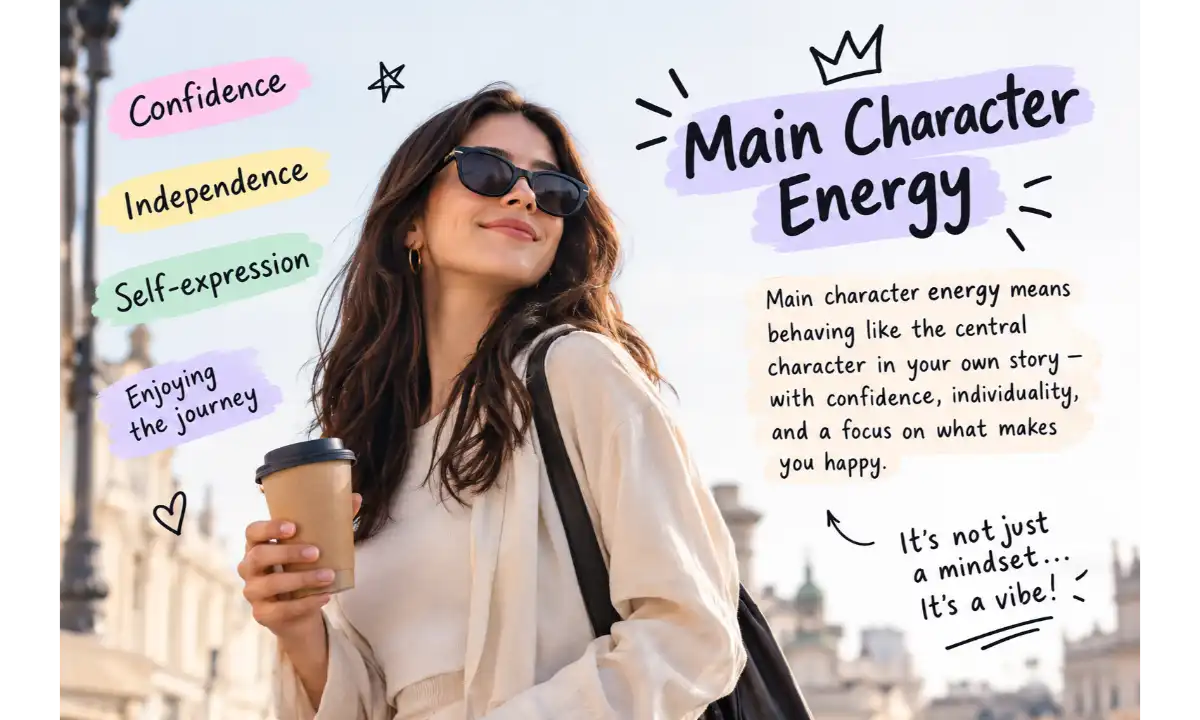
Main character energy means behaving like the central character in your own story, usually with confidence, self-expression, and a strong sense of individuality.
People commonly use it as a compliment on social media and in everyday conversations, but it can also describe someone who acts self-centered or overly dramatic.
What Does Main Character Energy Mean in Slang?
Main character energy is a popular internet slang phrase that describes someone who carries themselves like the main character in a movie, television show, or novel.
Imagine a person who dresses confidently, enjoys their own company, follows their interests, and does not depend on other people’s approval. Someone might say that person has main character energy.
The phrase is often positive. It encourages people to take control of their lives, enjoy meaningful experiences, and feel comfortable being themselves.
For example:
- “She walked into the party with main character energy.”
- “Taking myself on a solo date today. Main character energy!”
- “He has main character energy without even trying.”
In these examples, the phrase describes confidence, independence, and a noticeable presence.
However, the expression does not always mean something positive. If someone behaves as though everyone else is unimportant, another person might say they have main character energy sarcastically.
Is Main Character Energy a Compliment?
Usually, yes. People often use the phrase to praise someone’s confidence, style, independence, or ability to enjoy life.
For example, your friend might post a picture of herself exploring a new city alone. You could comment, “This is main character energy!” You are saying that she looks confident and is making the most of her experience.
The phrase can also encourage someone to stop worrying about other people’s opinions and focus on what makes them happy.
However, context matters.
| Situation | Intended meaning |
|---|---|
| Someone confidently tries something new | Positive: independent and self-assured |
| A friend enjoys a solo trip | Positive: comfortable and adventurous |
| Someone dresses boldly | Positive: expressive and confident |
| A person constantly demands attention | Negative: self-centered or dramatic |
| Someone exaggerates a small event | Sarcastic: acting like everything revolves around them |
The speaker’s tone, facial expression, and relationship with the person can help you understand which meaning they intend.
How Is Main Character Energy Used on Social Media?
The phrase is especially useful in posts and comments about confidence, personal style, memorable experiences, and self-improvement.
Main Character Energy on TikTok
On TikTok, people may use the phrase in videos showing outfit changes, solo adventures, personal achievements, or everyday moments edited to feel cinematic.
For example, someone might film themselves walking through a city while listening to their favorite song and caption the video, “Romanticizing my life. Main character energy.”
The idea is to appreciate ordinary experiences rather than wait for something extraordinary to happen.
Main Character Energy on Instagram
On Instagram, the phrase may appear in photo captions, travel posts, selfies, and lifestyle content.
Example:
“New city, new experiences, and no need for anyone’s approval. Main character energy.”
Here, the phrase expresses independence and excitement about life.
Main Character Energy in Text Messages
Friends may use it to praise one another, encourage confidence, or joke about dramatic behavior.
Example:
A Friend : “I booked a weekend trip just for myself.”
Friend B: “Okayyy, main character energy!”
Friend B is celebrating the decision and suggesting that Friend A is confidently creating memorable experiences.
Main Character Energy in Memes
Memes often use the phrase humorously. Someone might describe walking confidently into a room, imagining a dramatic soundtrack while doing chores, or treating a small achievement like a movie scene.
In these situations, the phrase adds humor and makes an ordinary moment feel special.
What Does Main Character Energy Mean From a Girl or Guy?
The phrase does not have a separate definition based on gender. Its meaning depends on the person, the situation, and the way it is used.
When a girl has main character energy: People may describe her as confident, stylish, independent, or comfortable expressing herself. For example, a girl who travels alone and enjoys her own company might be described this way.
When a guy has main character energy: It may describe someone who carries himself confidently, pursues his goals, or has a noticeable presence. For example, a guy who confidently performs on stage might receive the same comment.
When someone says you have main character energy: They are often complimenting your confidence or the way you approach life. If they say it sarcastically, however, they might mean that you are being dramatic or acting as though everything is about you.
The phrase alone does not prove that someone is romantically interested in you.
What Is the Difference Between Main Character Energy and Main Character Syndrome?
These expressions sound similar, but they have different meanings.
Main character energy usually describes a confident attitude, a strong sense of identity, or the ability to enjoy your own life. It is often positive.
Main character syndrome is an informal expression used when someone seems to treat themselves as the center of every situation. They may ignore other people’s feelings or assume that every event revolves around them.
For example:
- Main character energy: “I’m proud of my progress, and I’m celebrating my achievements.”
- Main character syndrome: “Only my problems matter, and everyone should pay attention to me.”
Neither phrase is a clinical diagnosis. They are informal expressions used to describe attitudes and behavior.
The important difference is that confidence can coexist with respect for others. Acting as though other people do not matter is something else entirely.
How Can You Show Main Character Energy in Real Life?
You do not need expensive clothes, a perfect appearance, or a large social media following to have main character energy.
You can express it through everyday choices:
- Make your own decisions: Choose activities that reflect your interests and values.
- Build confidence gradually: Try new things, even when you feel nervous.
- Enjoy your own company: Spend time on hobbies, exercise, reading, or exploring new places.
- Celebrate small wins: Recognize your progress instead of constantly comparing yourself with others.
- Express your personal style: Wear and do things that make you feel comfortable and authentic.
- Respect other people: Enjoy your own story without treating everyone else as a background character.
The healthiest version of main character energy combines self-confidence with kindness. You can value your own life while still listening to others and appreciating their experiences.
Where Did the Phrase Main Character Energy Come From?
The phrase draws on the familiar idea of a main character in a story: the person whose experiences and choices drive the plot.
Social media helped popularize the expression as people began describing everyday experiences in cinematic terms. The related phrase “main character syndrome” also became common in online discussions about self-centered behavior.
The expression’s exact first use is difficult to establish. It is safer to understand it as part of internet culture rather than attribute its origin to one specific creator or platform.
Today, people use it in captions, memes, videos, conversations, and discussions about confidence and personal growth.
Similar Slang Terms and Their Meanings
| Slang term | Meaning | How it differs |
|---|---|---|
| Main character energy | Confidence and a strong sense of individuality | Focuses on how someone carries themselves or experiences life. |
| That girl | An aspirational image of someone with organized, healthy, or stylish habits | Often focuses on lifestyle and routines. |
| It girl | A person known for style, charm, or social appeal | Often emphasizes popularity and influence. |
| Slay | To do something impressively or look exceptionally good | Usually praises a specific action, appearance, or achievement. |
| Rizz | Charm or skill in attracting romantic interest | Focuses on flirting and attraction. |
| Pick-me | A person perceived as seeking approval by putting others down or distancing themselves from a group | Usually carries a negative judgment. |
These terms can overlap, but they are not interchangeable. Someone may have main character energy without being popular, especially stylish, or romantically charming.
Common Misunderstandings About Main Character Energy
It does not mean you must be the center of attention. A quiet person can have main character energy by confidently making their own choices.
It is not always about appearance. Confidence, independence, creativity, and personal growth can all fit the phrase.
It does not automatically mean someone is arrogant. The positive meaning celebrates self-worth, while the negative meaning criticizes self-centered behavior.
It does not mean life must be perfect. The phrase can describe someone who embraces ordinary experiences, including mistakes and challenges.
It is not a formal psychological term. Main character energy is informal slang, not a clinical label.
When Should You Avoid Using Main Character Energy?
The phrase is generally casual and suitable for friendly conversations, social media captions, and informal messages.
However, it may not fit every situation. In a formal business report, job application, or professional presentation, clearer wording is usually better.
Instead of saying someone has main character energy, you could describe them as:
- Confident and self-assured
- Independent and proactive
- Comfortable expressing themselves
- Focused on personal growth
- Able to take initiative
Also, avoid using the phrase to mock someone who is simply celebrating an achievement or enjoying time alone. Confidence is not the same as arrogance.
Key Takeaways
- Main character energy means acting confidently and embracing your own life story.
- People commonly use it as a compliment in texts and social media posts.
- It can describe independence, individuality, style, and self-confidence.
- In a sarcastic context, it may criticize dramatic or self-centered behavior.
- Main character energy is not the same as main character syndrome.
- The healthiest form combines self-confidence with respect for others.
Frequently Asked Questions
1. What does main character energy mean in simple words?
It means feeling confident, being yourself, and treating your life as something worth enjoying. It often describes someone who makes their own choices without constantly seeking approval.
2. What does main character energy mean on TikTok?
On TikTok, it often describes videos of people enjoying life, trying new experiences, showing personal style, or making everyday moments feel like scenes from a movie.
3. Is main character energy a good thing?
Usually, yes. It can encourage confidence and independence. It becomes negative when someone uses the idea to justify selfishness or disregard for other people.
4. What does it mean when someone says I have main character energy?
They are probably complimenting your confidence, individuality, or presence. If they say it sarcastically, they may be suggesting that you are acting dramatic or self-centered.
5. How do I get main character energy?
Focus on your interests, make decisions that reflect your values, celebrate progress, and become comfortable spending time alone. You do not need to impress everyone to feel confident.
6. What is the difference between main character energy and main character syndrome?
Main character energy usually describes confidence and individuality. Main character syndrome is an informal, critical expression for behavior that makes someone seem overly focused on themselves.
7. Can a shy person have main character energy?
Yes. Main character energy does not require being loud or outgoing. A shy person can show it by trusting their decisions, pursuing their goals, and expressing themselves in ways that feel natural.
8. Is main character energy the same as being narcissistic?
No. The phrase is casual slang and does not establish anything about a person’s mental health. Confidence and self-expression alone do not mean someone has narcissistic traits or a personality disorder.
Conclusion
Main character energy is about taking an active role in your own life, expressing your individuality, and feeling comfortable with who you are. People often use it to celebrate confidence, independence, and memorable everyday experiences. However, the phrase can become sarcastic when someone seems to demand attention or overlook other people’s needs.
The key is to understand the context rather than assume every use is a compliment. You can embrace your own story without needing to be the center of every room—and that is what makes the positive meaning of main character energy worthwhile.

Tayyab Hassan is a Master’s graduate, content writer, and contributor at Meanifiy.com. He specializes in creating informative, reader-friendly content that simplifies language, meanings, and educational topics. With a commitment to accuracy and clarity, he helps readers understand complex concepts through engaging and accessible articles.