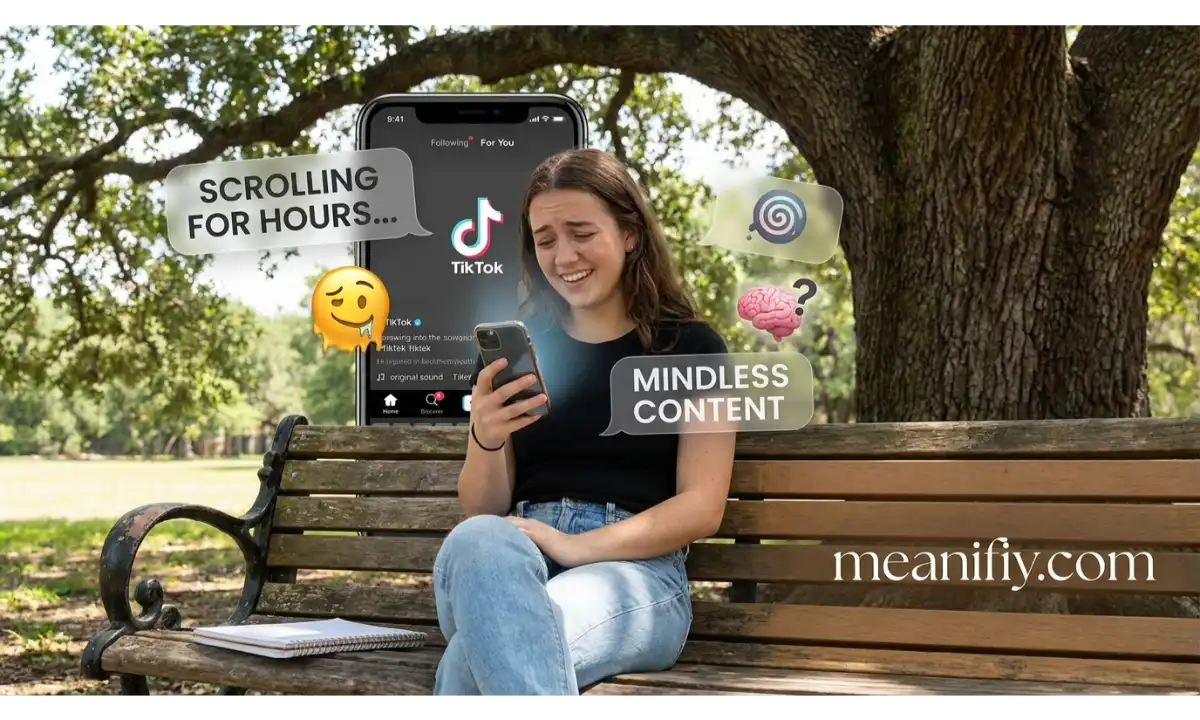
When I scroll through TikTok, I often see people talking about “brain rot” in comments, captions, and funny videos. At first, I might think the phrase sounds serious, but its online meaning is usually humorous.
The brain rot meaning on TikTok refers to content, jokes, trends, or internet slang that people consume so much that it feels like their brains are full of meaningless or silly information. I may also see people use it to describe their obsession with a meme, a fictional character, or a viral trend they cannot stop watching.
Sometimes, people use the phrase to joke about spending too much time online. In this guide, I’ll explain what brain rot means on TikTok, show how people use it in real conversations, and help me understand when it is a joke rather than a serious concern.
Quick Answer:
On TikTok, “brain rot” usually describes silly, repetitive, or addictive online content and the feeling of consuming too much of it.
People also use it for internet memes, niche obsessions, and slang that takes over their conversations. The phrase can be humorous or critical, depending on the context.
What Does Brain Rot Mean on TikTok?
Brain rot is internet slang for content or habits that seem to fill someone’s mind with trivial, repetitive, or low-quality online material.
On TikTok, the phrase often appears when people watch the same videos repeatedly, become obsessed with a meme, or start using viral expressions in everyday conversations.
For example, someone might watch dozens of videos featuring the same fictional character and say, “This character has given me brain rot.” They usually mean they cannot stop thinking about the character, not that their brain is physically damaged.
People also use brain rot to criticize endless scrolling or content they consider pointless. The meaning depends on whether they are joking about an obsession or expressing genuine frustration with their screen time.
How Do People Use Brain Rot on TikTok?
The phrase appears in several common situations.
1. When Someone Is Obsessed With a Trend
TikTok users often call something brain rot when they keep watching, discussing, or thinking about it.
Example: “I’ve watched this dance 50 times. Actual brain rot.”
The person is joking about repeatedly watching the same trend.
2. When a Meme Becomes Extremely Popular
Some memes spread through repeated jokes, unusual sounds, and phrases that people copy across videos.
Example: “My whole For You Page is brain rot now.”
This means the person’s feed is full of silly or repetitive content.
3. When Internet Slang Enters Everyday Speech
People sometimes start using TikTok expressions outside the app, even when nobody else understands them.
Example: “I said ‘skibidi’ at dinner. TikTok brain rot is getting to me.”
The speaker is joking that internet slang has become part of their normal vocabulary.
4. When Someone Cannot Stop Thinking About a Character
Fans may use brain rot to describe an intense interest in a TV character, celebrity, game, or fictional relationship.
Example: “I have serious brain rot over this character.”
Here, the phrase describes an obsession or strong interest rather than necessarily criticizing the content.
What Is Brain Rot Content?
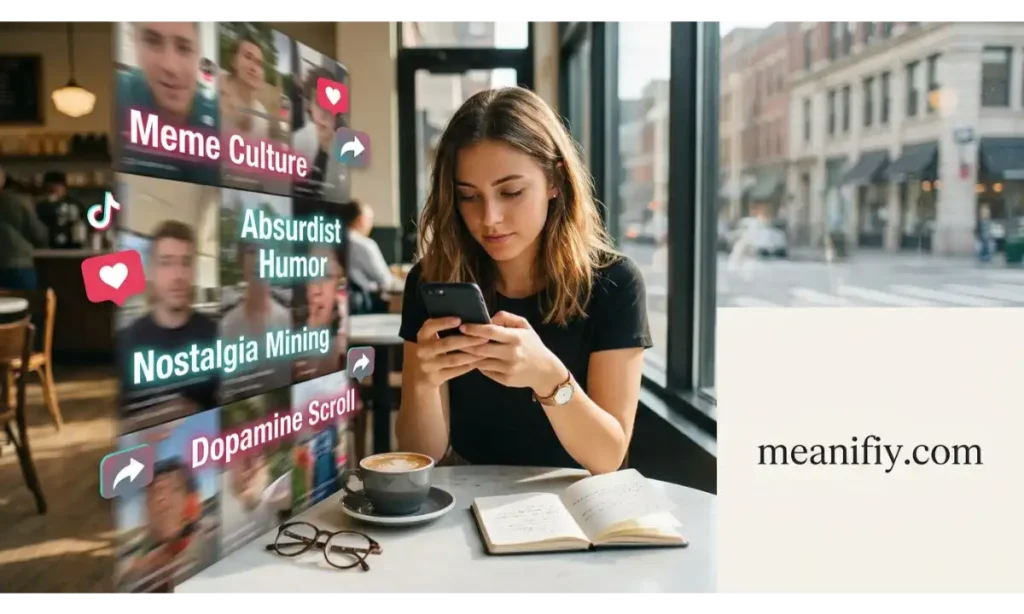
Brain rot content generally refers to online material that people consider silly, chaotic, repetitive, or easy to consume without much thought.
On TikTok, it may include:
- Short videos built around repeated jokes or sounds.
- Random humor and absurd memes.
- Viral catchphrases repeated in different situations.
- Edits of popular characters or celebrities.
- Fast-paced videos designed to hold attention.
- Niche memes that become confusing to people outside the trend.
Not everyone agrees on what counts as brain rot. One person may find a meme pointless, while another may find it genuinely funny or creative.
The label describes a person’s reaction to the content. It does not automatically mean every short video is harmful or worthless.
Popular Examples of TikTok Brain Rot
<text color=”secondary” size=”sm”>These examples illustrate internet culture and how users apply the phrase; they are not an official list of brain rot trends.</text>
<box gap={3}> <row align=start gap={3}> <AsyncImage query=”Skibidi Toilet internet meme character” aspectRatio=”3:4″ maxWidth=”112px”/> <box flex=”1″ gap={1}> **Skibidi Toilet**
  This unusual internet series became associated with absurd, repetitive meme humor. People may call it brain rot when discussing how often its characters and references appear online.
</box>
1 </row> <divider color=”subtle”/> <row align=start gap={3}> <AsyncImage query=”Italian brainrot Tralalero Tralala surreal shark meme” aspectRatio=”3:4″ maxWidth=”112px”/> <box flex=”1″ gap={1}> **Italian brainrot memes**
  These surreal memes often combine AI-generated imagery, strange characters, and rhythmic or nonsensical audio. The term is also used as the name of this particular meme style.
</box>
2 </row> <divider color=”subtle”/> <row align=start gap={3}> <AsyncImage query=”Gen Z internet slang meme reaction collage” aspectRatio=”3:4″ maxWidth=”112px”/> <box flex=”1″ gap={1}> **Repeated viral slang**
  Expressions such as “rizz,” “sigma,” and “skibidi” can become part of brain rot jokes when people repeat them constantly or use them in unexpected situations.
</box>
</row> </box>
These examples show why the phrase is flexible: it can describe a type of content, an online obsession, or the habit of repeating internet jokes.
Real Conversation Examples
Here are natural ways someone might use brain rot in TikTok-related conversations.
Example 1: Talking about endless scrolling
Person A: “You said you’d watch one video an hour ago.”
Person B: “I know. TikTok brain rot got me again.”
Meaning: Person B is joking about losing track of time while watching videos.
Example 2: Discussing a meme
Person A: “Why do you keep saying that weird phrase?”
Person B: “It’s from TikTok. I’ve got brain rot 😂”
Meaning: Person B has been repeating a viral phrase so often that it has become a habit.
Example 3: Talking about a favorite character
Person A: “You mentioned that character five times today.”
Person B: “Don’t judge me. The brain rot is real.”
Meaning: Person B is playfully admitting to an intense interest.
Example 4: Describing a video feed
Person A: “What have you been watching lately?”
Person B: “Random memes and chaotic edits. My For You Page is pure brain rot.”
Meaning: Person B’s feed is full of content they consider silly or absurd.
Is Brain Rot an Insult?
Brain rot is not always an insult. People often use it to joke about themselves, their favorite memes, or content they enjoy despite finding it ridiculous.
However, the phrase can sound critical when someone uses it to dismiss another person’s interests or intelligence.
Compare these examples:
- Playful: “We have brain rot for this show.”
- Self-deprecating: “I’ve been scrolling for hours. My brain is fried.”
- Critical: “That video is pure brain rot.”
- Insulting: “Your brain is rotting because you watch that stuff.”
The last example directly targets another person. If you want to avoid offending someone, describe the content instead of judging the person who enjoys it.
Does Brain Rot Have a Serious Meaning?
Yes. The phrase existed before its recent popularity on social media and has been used to describe a perceived decline in someone’s thinking or intellectual focus, especially from consuming material considered trivial.
In everyday online conversations, however, people often use it figuratively and humorously.
Spending a long time scrolling can interfere with sleep, concentration, or daily responsibilities for some people. But seeing brain rot in a TikTok caption does not mean someone has a medical condition or actual brain damage.
If a person is genuinely worried about their screen habits, it is more helpful to look at how those habits affect their daily life than to rely on a slang label.
Where Did the Term Brain Rot Come From?
The expression is older than TikTok. It has been used in English to criticize material seen as intellectually undemanding or to describe a perceived decline in mental sharpness.
Social media helped give the phrase a newer, more playful use. People began applying it to viral memes, repeated online jokes, intense fandoms, and endless scrolling.
In 2024, Oxford University Press selected “brain rot” as its Word of the Year, reflecting the phrase’s growing prominence in discussions about online culture and the effects of consuming large amounts of low-quality digital content.
Today, its meaning can be serious, humorous, or self-mocking, depending on the speaker.
Brain Rot vs. Similar Internet Slang
| Term | Meaning | Difference |
|---|---|---|
| Brain rot | Silly or repetitive content, or an intense online obsession | Can describe content, habits, or someone’s fixation. |
| Chronically online | Spending so much time online that internet culture strongly shapes one’s behavior | Focuses more on a person’s online habits. |
| Brain fried | Feeling mentally exhausted or overwhelmed | Usually describes temporary tiredness or mental overload. |
| Addicted to a trend | Unable to stop engaging with a trend, often used casually | Emphasizes repeated engagement rather than the content itself. |
| Doomscrolling | Continuing to scroll through upsetting or negative news | Specifically relates to repeatedly consuming negative information. |
These terms can overlap, but they are not interchangeable. For example, someone can be chronically online without being obsessed with a specific meme, and doomscrolling usually involves negative content rather than absurd humor.
Key Takeaways
- Brain rot on TikTok usually refers to silly, repetitive, or highly absorbing online content.
- People use it for viral memes, internet slang, and intense fandoms.
- It can be humorous, self-critical, or dismissive depending on context.
- The phrase does not automatically mean actual brain damage.
- Its popularity reflects wider conversations about internet habits and digital culture.
Frequently Asked Questions
1. What does brain rot mean on TikTok?
It usually means silly, repetitive, or addictive-feeling online content that people consume frequently. Users may also apply it to an obsession with a meme, character, or trend.
2. What does “I have brain rot” mean?
It usually means the person cannot stop thinking about a particular meme, show, character, or online trend. It is commonly a humorous way to describe an obsession.
3. What is Italian brain rot?
Italian brain rot is a style of surreal internet meme featuring bizarre characters, AI-generated imagery, and often rhythmic or nonsensical audio. The name refers to the meme trend, not to a medical condition or all Italian content.
4. Is brain rot a bad thing?
Not necessarily. People often use the term jokingly about content they enjoy. However, if excessive scrolling disrupts sleep, focus, or responsibilities, it may be worth changing those habits.
5. Why do people call TikTok videos brain rot?
They may consider the videos repetitive, absurd, chaotic, or lacking substance. Others use the phrase ironically because they enjoy the videos and keep watching them.
6. Does brain rot mean someone is fool?
No. The phrase does not automatically describe a person’s intelligence. It usually refers to content, habits, or an obsession, although it can be used as an insult.
7. Is brain rot still used outside TikTok?
Yes. People use it on other social platforms, in group chats, gaming communities, and everyday conversations when discussing memes, internet habits, or intense interests.
Conclusion
The brain rot meaning on TikTok goes beyond watching silly videos. It can describe a meme that takes over someone’s feed, a character they cannot stop thinking about, or internet slang they keep repeating in everyday life.
People often use the phrase humorously, although it can also criticize low-quality content or excessive scrolling.
The best way to understand it is to look at what the person is discussing and whether they are joking, expressing enthusiasm, or criticizing something.
In most TikTok conversations, brain rot is an informal expression about internet culture, not a literal medical diagnosis.

Tayyab Hassan is a Master’s graduate, content writer, and contributor at Meanifiy.com. He specializes in creating informative, reader-friendly content that simplifies language, meanings, and educational topics. With a commitment to accuracy and clarity, he helps readers understand complex concepts through engaging and accessible articles.