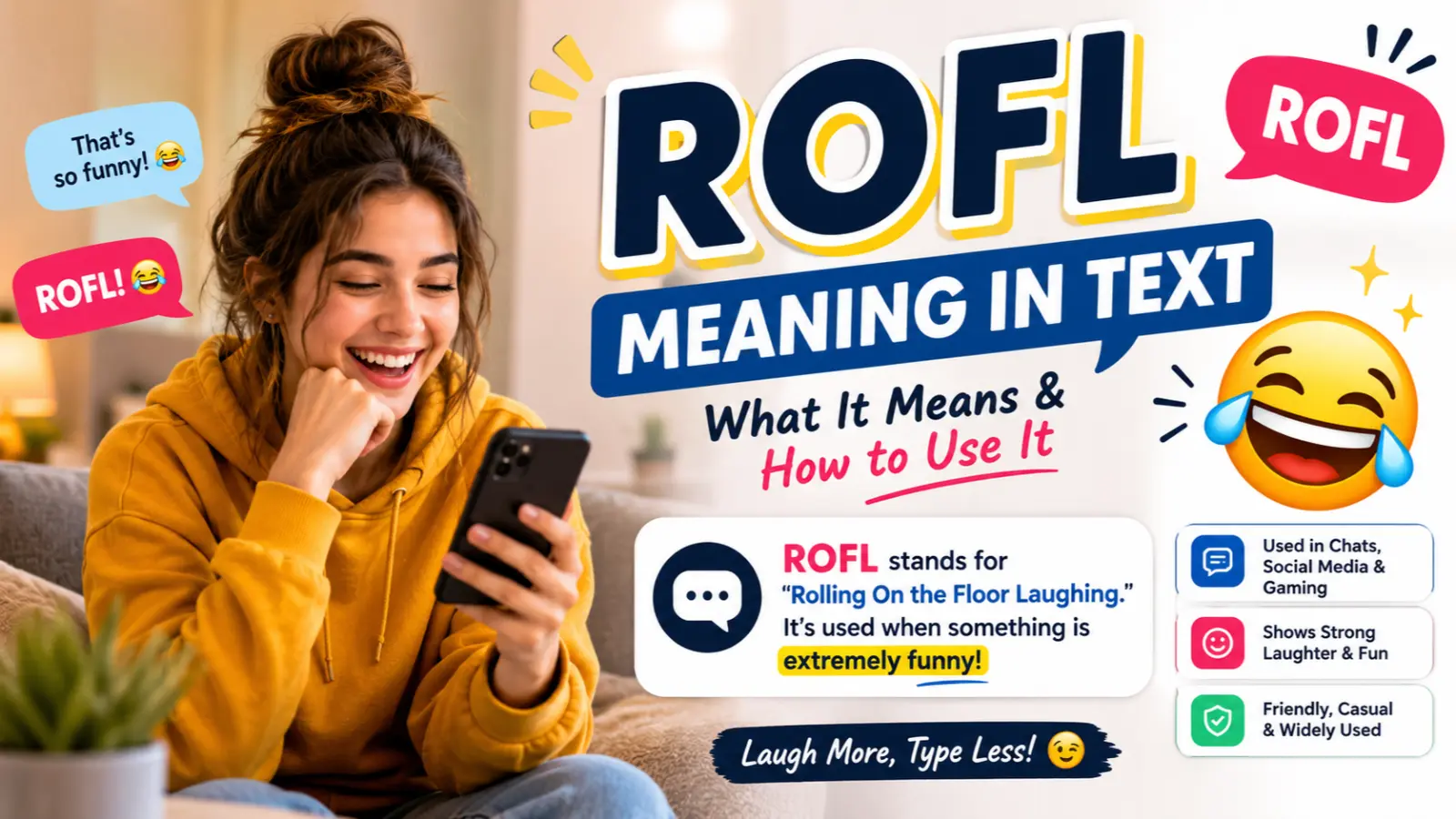
ROFL meaning in text stands for “Rolling On the Floor Laughing.” Learn its meaning, usage, examples, origin, and how people use it in chats and social media.
Have you ever received a message that simply says “ROFL 😂” and wondered what it means?
Online conversations are full of abbreviations and slang terms that help people express emotions quickly. One of the most popular internet acronyms is ROFL. You’ll often see it in text messages, social media comments, gaming chats, and online discussions when something is extremely funny.
Understanding modern internet slang can help you communicate better and avoid confusion when chatting with friends, coworkers, or online communities.
In this guide, you’ll learn the complete meaning of ROFL, where it came from, how people use it, and whether it’s appropriate in different situations.
Quick Answer
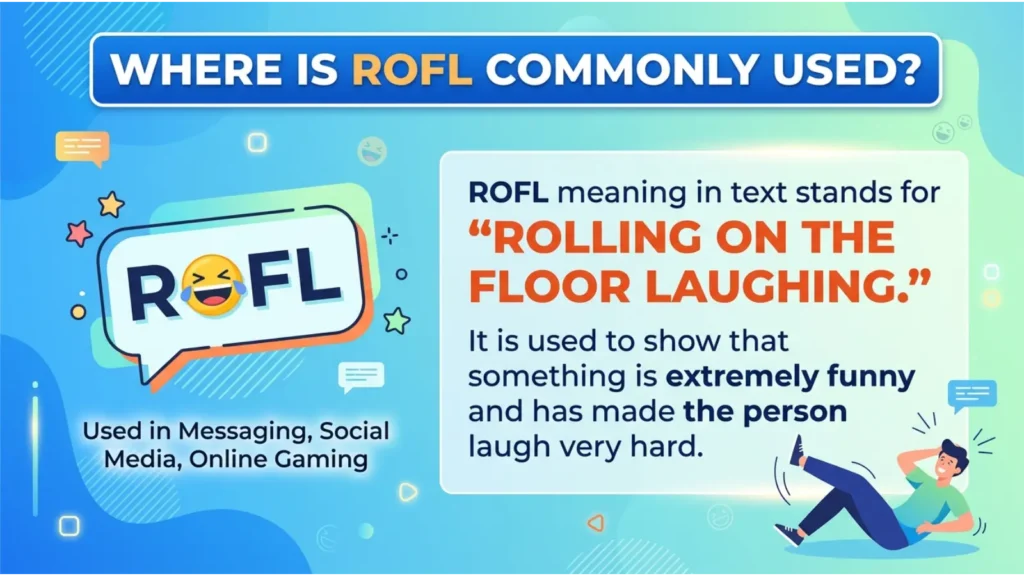
ROFL meaning in text stands for “Rolling On the Floor Laughing.” It is used to show that something is extremely funny and has made the person laugh very hard.
What Does ROFL Mean in Text?
ROFL is an internet slang acronym that means:
Rolling On the Floor Laughing
People use it when they find something so funny that ordinary expressions like “haha” or “lol” don’t seem strong enough.
When someone sends ROFL, they usually want to show that a joke, meme, story, or comment made them laugh a lot.
Example:
Friend: “I accidentally waved back at someone who wasn’t waving at me.”
You: “ROFL 😂”
In this example, ROFL expresses strong amusement.
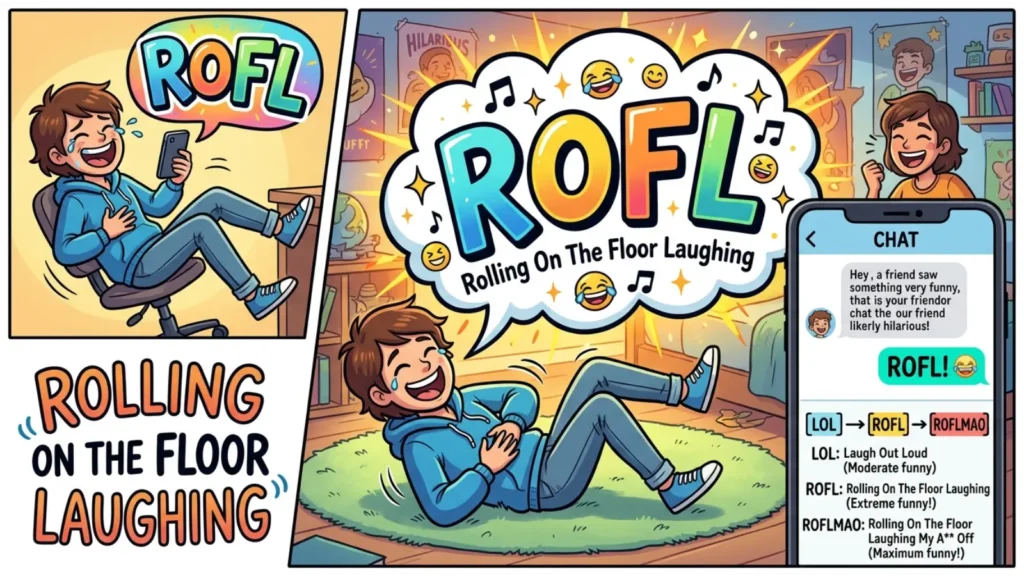
ROFL Full Form
The ROFL full form is:
R – Rolling
O – On
F – the Floor
L – Laughing
The phrase creates a funny image of someone laughing so hard that they fall onto the floor.
Of course, most people aren’t literally rolling on the floor. It’s simply a humorous exaggeration used to emphasize laughter.
What Does ROFL Stand For?
If you’ve searched for “what does ROFL stand for,” the answer is simple:
ROFL stands for “Rolling On the Floor Laughing.”
It is one of the oldest and most recognizable internet abbreviations and is still widely used today.
Is ROFL Rude, Offensive, or Neutral?
ROFL is generally considered a neutral and friendly slang term.
It is usually:
✅ Funny
✅ Casual
✅ Positive
✅ Non-offensive
It may be inappropriate when:
- Discussing serious topics
- Responding to bad news
- Communicating in formal business settings
- Talking about sensitive situations
Always consider the context before using ROFL.
Where Is ROFL Commonly Used?
ROFL appears across many digital platforms.
Text Messages
Friends often use ROFL when sharing funny stories.
Social Media
You can find it in comments on:
- TikTok
- X (Twitter)
- Snapchat
Gaming Chats
Gamers frequently use ROFL during humorous moments while playing online.
Group Chats
It helps people quickly react to jokes without typing long responses.
Why Do People Use ROFL?
People use ROFL because it communicates strong laughter quickly.
Benefits of Using ROFL
- Saves time while typing
- Shows genuine amusement
- Makes conversations more expressive
- Adds personality to messages
- Creates a friendly tone
Instead of writing:
“That was extremely funny and made me laugh a lot.”
You can simply write:
“ROFL!”
Real-Life Examples of ROFL Usage
Friendly Conversation
Sarah: “My cat tried to attack its own reflection.”
Emma: “ROFL! That’s hilarious.”
Casual Texting
Friend: “I wore two different shoes to work today.”
You: “ROFL 😂”
Social Media Comment
Post: “When you confidently answer a question and realize nobody asked you.”
Comment: “ROFL! That’s me every day.”
Gaming Chat
Player 1: “I accidentally eliminated myself.”
Player 2: “ROFL bro!”
Group Chat
Friend: “I spent 20 minutes looking for my glasses while wearing them.”
Everyone: “ROFL 😂😂”
Origin and History of ROFL
ROFL emerged during the early days of internet communication.
It became popular in:
- Online forums
- Chat rooms
- Instant messaging platforms
- Early social networks
During the 1990s and early 2000s, internet users created abbreviations to communicate faster. ROFL became one of the most widely used expressions for laughter.
Over time, it spread into text messaging and social media, where it remains popular today.
ROFL vs Similar Slang Terms
Many internet slang terms express laughter, but they vary in intensity.
| Slang Term | Meaning | Level of Laughter |
|---|---|---|
| LOL | Laughing Out Loud | Mild |
| LMAO | Laughing My Ass Off | Strong |
| ROFL | Rolling On the Floor Laughing | Very Strong |
| LMFAO | Laughing My Freaking Ass Off | Extremely Strong |
| Haha | Standard laughter | Light |
| XD | Laughing face expression | Moderate |
ROFL vs LOL
LOL usually means something is funny.
ROFL suggests something is extremely funny.
Example
LOL: “That’s funny.”
ROFL: “That’s unbelievably funny!”
When Should You Avoid Using ROFL?
Although ROFL is widely accepted, there are situations where it may not be appropriate.
Avoid Using ROFL In:
- Professional emails
- Job applications
- Academic writing
- Customer service communications
- Serious conversations
- Medical or emergency discussions
Example
If someone says:
“My dog is sick.”
Replying with ROFL would be inappropriate and insensitive.
Polite Alternatives to ROFL
If you’re in a more professional or formal setting, consider these alternatives:
- That’s funny.
- That made me laugh.
- I found that amusing.
- That’s hilarious.
- Thanks for sharing.
- I enjoyed that.
These expressions communicate humor while maintaining professionalism.
Impact of Using Slang in Communication
Internet slang like ROFL has changed how people communicate online.
Positive Effects
- Faster communication
- More expressive conversations
- Better emotional context
- Stronger social connections
Possible Drawbacks
- Confusion among unfamiliar users
- Misunderstandings across generations
- May appear unprofessional in formal settings
The key is knowing when and where to use slang appropriately.
Is ROFL Safe for Social Media?
Yes, ROFL is generally safe for social media platforms.
It does not contain offensive language and is widely recognized by internet users worldwide.
You can comfortably use ROFL on:
- Instagram comments
- Facebook posts
- TikTok videos
- Snapchat messages
- Gaming communities
- Online forums
However, always be mindful of the topic being discussed.
Different Ways People Use ROFL
Modern internet users often combine ROFL with emojis and other slang.
Examples
- ROFL 😂
- ROFLMAO
- ROFL 🤣
- ROFL that’s hilarious!
- OMG ROFL
- ROFL I’m crying
These variations help emphasize laughter even further.
Common Misunderstandings About ROFL
Does ROFL Mean Someone Is Actually on the Floor?
No.
It’s usually a figure of speech and not meant literally.
Is ROFL Outdated?
While newer slang appears regularly, ROFL is still widely understood and used across the internet.
Is ROFL the Same as LOL?
Not exactly.
ROFL generally expresses stronger laughter than LOL.
Frequently Asked Questions (FAQs)
What is the ROFL meaning in text?
ROFL means “Rolling On the Floor Laughing.” It shows that something is extremely funny.
What does ROFL stand for?
ROFL stands for Rolling On the Floor Laughing.
Is ROFL stronger than LOL?
Yes. ROFL usually indicates much stronger laughter than LOL.
Is ROFL rude?
No. ROFL is generally friendly and non-offensive when used in appropriate situations.
Can I use ROFL on social media?
Yes. ROFL is commonly used on social media platforms, messaging apps, and gaming chats.
Is ROFL still popular?
Yes. Although many new slang terms exist, ROFL remains widely recognized and understood online.
Conclusion
Understanding the ROFL meaning in text can help you better navigate modern digital conversations. The acronym stands for “Rolling On the Floor Laughing” and is used to express intense laughter or amusement.
If you’re chatting with friends, commenting on social media, or playing online games, ROFL is a simple way to show that something is incredibly funny. Like any slang term, its effectiveness depends on context. It’s perfect for casual conversations but should generally be avoided in professional or serious situations.
Now that you know the ROFL full form, its history, usage, and alternatives, you’ll be able to recognize and use it confidently in your everyday online communication.

Dave Barry is a slang and modern language writer who explains internet terms, texting abbreviations, and social media phrases in a simple way. He creates easy-to-understand guides on trending slang, online expressions, and digital communication. His writing helps readers quickly understand modern English used in chats and social platforms. At Meanifiy, Dave Barry shares fun and informative slang meaning content for everyday readers.