If I see someone call another person “slime” in a text, comment, or social media post, I might wonder whether they are being friendly or insulting them.
The word can be confusing because its everyday meaning has nothing to do with the way people use it in modern slang. In casual online conversations, I may see phrases such as “What’s up, slime?”, “That’s my slime,” or “Good looks, slime.”
In this slang context, slime usually refers to a close friend, trusted person, homie, or someone I have a strong connection with.
The exact feeling behind the word depends on the speaker, their relationship, and the conversation. It is especially common in informal texting, hip-hop-influenced language, and social media conversations.
If I am trying to understand what someone means by “slime,” the surrounding message matters. The word can be friendly, playful, or occasionally negative. Here is the quick answer.
Quick Answer
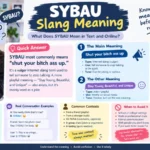
In slang, “slime” usually means a close friend, homie, trusted person, or associate. It is most commonly used casually in texting, social media, music, and online conversations between people who are comfortable with each other.
However, “slime” also has literal meanings, so context is important.
What Does “Slime” Mean in Slang?
When someone calls another person “slime,” they are often using it as a casual term for a friend or someone they know well.
For example:
“What’s good, slime?”
This can mean something like:
“What’s up, bro?” or “How are you, my friend?”
Another common example is:
“That’s my slime.”
Here, the speaker is generally saying that the person is someone they are close to, trust, or consider part of their circle.
The word is highly informal. It is not normally something I would use in a formal email, school assignment, job interview, or professional conversation.

Why Does “Slime” Mean Friend?
The slang use of “slime” developed separately from the ordinary meaning of the word. In everyday English, slime refers to a slippery, sticky substance.
Slang often takes ordinary words and gives them completely different social meanings.
In modern music and internet culture, “slime” became associated with ideas such as friendship, loyalty, belonging, and one’s close circle.
Its use has been especially visible in rap and hip-hop language before spreading more broadly through social media and texting.
There is no single universally accepted person or moment that can be credited as the exact origin of this slang meaning.
Different communities have used the word in different ways, so claims that one person definitively invented it should be treated cautiously.
How People Use “Slime” in Real Conversations
The easiest way to understand the slang is to see how it works naturally.
Friendly greeting
Person A: “Yo slime, you outside?”
Person B: “Yeah, I’m about to pull up.”
Here, “slime” works like “bro,” “dude,” or “homie.”
Talking about a close friend
“That’s my slime. We’ve known each other forever.”
The speaker is describing someone they consider a close friend or trusted person.
Showing appreciation
“Appreciate you, slime.”
This can mean:
“Thanks, bro.”
Social media comment
“My slime 😂🔥”
A person might leave this under a friend’s post as a casual expression of familiarity or support.
Casual greeting in a message
“What you on, slime?”
This can simply mean:
“What are you doing?”
The word does not necessarily add a specific meaning to the sentence. It can function mainly as a friendly way of addressing someone.
Is “Slime” a Compliment or an Insult?
Usually, slime is friendly when it is being used as slang between people who know each other.
For example:
- “What’s good, slime?”
- “My slime came through.”
- “Good looking out, slime.”
These generally sound positive or friendly.
However, context can completely change the meaning. Someone could also use “slime” in the ordinary negative sense, referring to a dishonest, unpleasant, or untrustworthy person.
For example:
“He’s a slime.”
That sentence can sound insulting rather than friendly.
So I should not assume that every use of “slime” is positive. The relationship between the speakers and the rest of the sentence matter.
“Slime” Meaning on TikTok, Instagram, Snapchat, and Texting
The slang can appear across informal social platforms, but its meaning usually stays similar.
On TikTok
On TikTok, “slime” may appear in captions, comments, jokes, or videos influenced by rap and internet slang. A creator might call a friend “slime” without intending anything negative.
On Instagram
Someone might comment:
“That’s my slime 🔥”
The comment usually signals familiarity, friendship, or support.
On Snapchat
In a Snapchat message, a phrase such as:
“Yo slime, where you at?”
is generally a casual greeting asking where the person is.
In texting
Texting is one of the easiest places to encounter this slang because messages are informal.
“Ayo slime 😂 what happened?”
Here, “slime” is functioning much like “bro” or “man.”
What Does “My Slime” Mean?
“My slime” usually means my friend, my homie, or someone in my close circle.
It can express familiarity and loyalty, although the strength of that relationship depends on the speaker.
For example:
“That’s my slime.”
Usually means:
“That’s my guy/friend.”
It does not necessarily mean the person is a best friend. Sometimes people use slang terms loosely with acquaintances or online friends.
What Does “Slime” Mean From a Girl or Guy?
The word itself does not have a special male or female meaning.
If a girl calls someone “slime,” she may simply be using casual slang for a friend or person she knows.
If a guy calls someone “slime,” it can likewise mean friend, homie, or trusted associate.
The important point is that “slime” does not automatically indicate romantic interest. You need to look at the rest of the conversation to understand the speaker’s intention.
Slime vs. Bro vs. Homie
These words can overlap, but they are not identical.
| Slang | Common meaning | Feeling |
| Slime | Friend, close associate, trusted person | Very casual; culture-dependent |
| Bro | Friend, male peer, or casual address | Extremely common and broad |
| Homie | Friend or close acquaintance | Friendly and informal |
| Dude | Person, friend, or casual address | Very broad and relaxed |
| Bestie | Very close friend | Usually stronger friendship emphasis |
“Slime” can sound more specific or culturally marked than “bro” or “dude,” so I should consider who is using it and where I encountered it.
Common Misunderstandings About “Slime”
It does not always mean something gross
The ordinary English meaning refers to a sticky substance, but the slang meaning can simply mean friend.
It does not always mean “enemy”
Because the word can sometimes describe a dishonest or unpleasant person, people may assume it is always negative. That is not true in slang conversations.
It does not automatically mean best friend
Someone can use “slime” casually without having a particularly deep friendship with the person.
It does not automatically have a romantic meaning
Calling someone “slime” is generally not a secret way of saying “I like you romantically.” Context is necessary.
When Should I Avoid Using “Slime”?
I would avoid using “slime” in situations where informal slang could sound inappropriate.
For example, it is better not to write:
“Thanks, slime.”
to a teacher, employer, customer, or formal business contact.
Instead, I could use:
- “Thanks!”
- “I appreciate it.”
- “Thank you for your help.”
- “I appreciate your support.”
Even among friends, I should remember that slang is influenced by culture and community. A word that sounds natural to one group may sound strange or disrespectful to another.
Key Takeaways
- “Slime” is commonly used as slang for a friend, homie, trusted person, or associate.
- It is especially common in informal texting, social media, music, and internet culture.
- “My slime” generally means someone in my close circle.
- The word can be friendly, but “slime” can also have negative meanings depending on context.
- It is highly informal and is usually unsuitable for professional communication.
- The safest way to understand it is to consider the sentence, relationship, and tone surrounding the word.
Frequently Asked Questions
What does “slime” mean in texting?
In texting, “slime” usually means friend, homie, or trusted associate. For example, “What’s up, slime?” is similar to “What’s up, bro?”
Is calling someone “slime” a compliment?
It can be. When used between friends, “slime” is often a friendly term of familiarity. However, the word can also be negative in other contexts, so the surrounding message matters.
What does “my slime” mean?
“My slime” generally means “my friend,” “my homie,” or “someone in my circle.” It usually expresses familiarity rather than romance.
What does “slime” mean on Snapchat?
On Snapchat, “slime” generally has the same informal meaning: friend, homie, or close associate. For example, “Yo slime, where you at?” is simply a casual greeting.
Is “slime” the same as “bro”?
Not exactly, but they can serve a similar purpose. Both can be used to address a friend casually. “Slime” has a more specific slang and cultural flavor, while “bro” is much broader.
Does “slime” mean boyfriend or girlfriend?
Not normally. “Slime” is generally a casual term for a friend, associate, or person in someone’s circle. It does not by itself indicate a romantic relationship.
Where did the slang “slime” come from?
The exact origin is difficult to assign to one person or one event. The slang has been used in different communities and became especially visible through hip-hop and internet culture. Because of this, a single definitive origin story should be treated cautiously.
Can “slime” be an insult?
Yes. Depending on the sentence, “slime” can refer to a dishonest or unpleasant person. That is different from the friendly slang use of “slime” as a term for a friend.
Conclusion
The slang meaning of “slime” is usually much more positive than the literal word suggests. In a casual message such as “What’s good, slime?”, it most likely means “What’s up, friend?” or “What’s up, bro?”
Still, I should always look at the context before deciding what someone means. Between friends, “slime” can communicate familiarity and loyalty, while in a negative sentence it can describe someone viewed as dishonest or unpleasant.
That flexibility is what makes the word confusing—and also why the surrounding conversation matters more than the word alone.

Tayyab Hassan is a Master’s graduate, content writer, and contributor at Meanifiy.com. He specializes in creating informative, reader-friendly content that simplifies language, meanings, and educational topics. With a commitment to accuracy and clarity, he helps readers understand complex concepts through engaging and accessible articles.