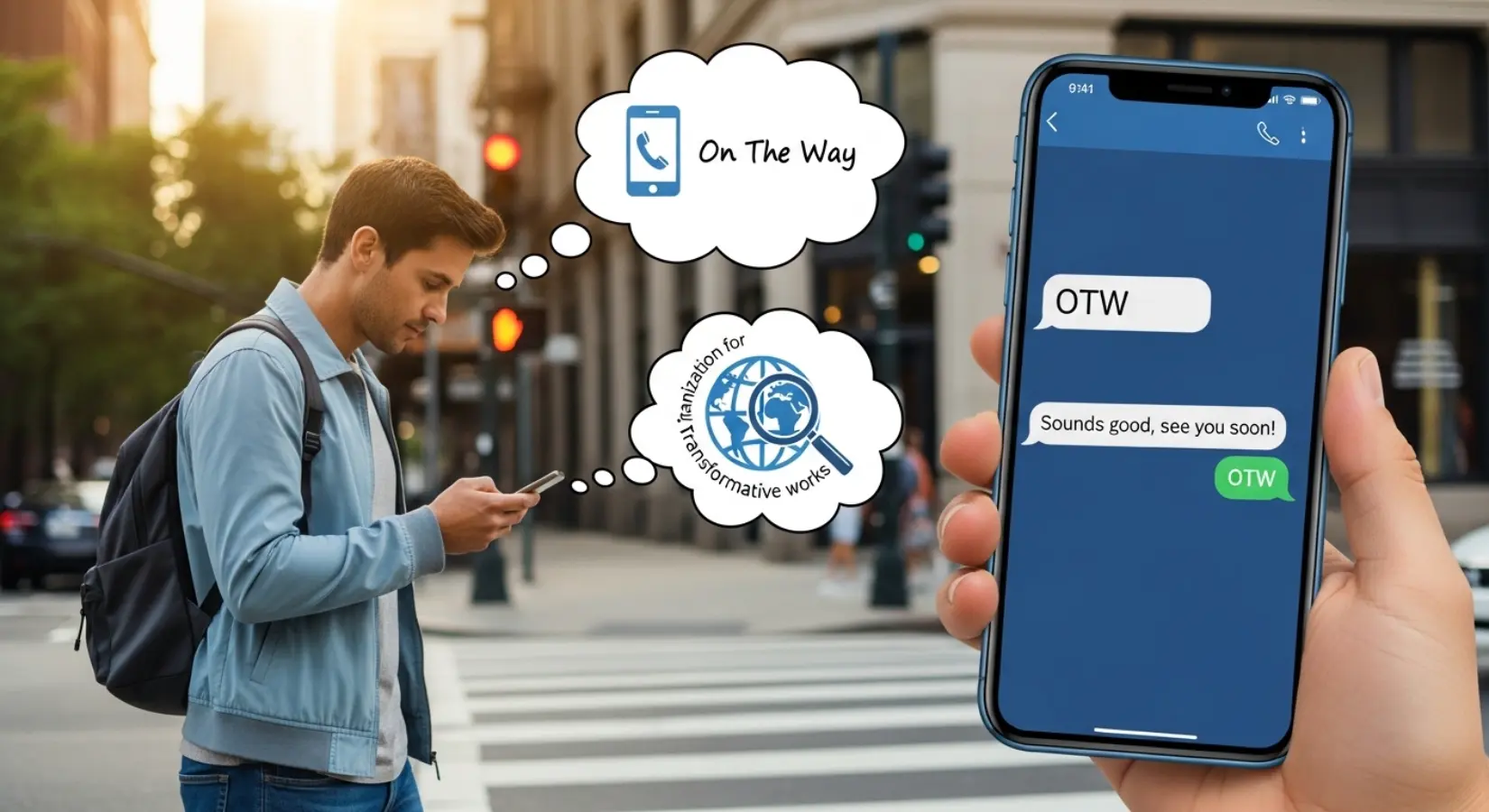
OTW meaning is something you’ve probably seen in texts, chats, or social media—and maybe wondered what it actually means. Slang like this is everywhere today, especially in fast conversations where people want to save time and sound casual.
If you’re texting a friend, replying on social media, or chatting in a group, understanding terms like OTW helps you stay in the loop.
People often search for “OTW meaning in text” because the abbreviation can feel unclear if you’re not used to internet slang. But don’t worry—it’s simple once you get it.
⚡ Quick Answer:
OTW stands for “On The Way.” It means someone is currently traveling or heading toward a place.
What does OTW mean in text?
In texting and online conversations, OTW is short for “On The Way.” It’s used to tell someone that you’re currently going somewhere or something is in progress.
Example:
- “I’m OTW, be there in 10 mins.”
It’s quick, easy, and saves time compared to typing the full phrase.
OTW full form / definition
- Full form: On The Way
- OTW meaning slang: A quick way to say you’re heading somewhere
- What does OTW stand for: It stands for movement or progress toward a destination
This slang is widely used in texting, messaging apps, and even casual work chats.
Meaning in Different Contexts
1. Physical Movement
Most commonly, OTW means you’re traveling.
- “Food is OTW.”
- “I’m OTW to your house.”
2. Progress or Completion
Sometimes it means something is being prepared or delivered.
- “Your order is OTW.”
- “The update is OTW soon.”
3. Emotional Context
It can also show urgency or reassurance.
- “Relax, I’m OTW!” (Don’t worry, I’m coming)
Is it rude, offensive, or neutral?
OTW is completely neutral.
It’s not rude or offensive in any way.
However:
- It’s casual, not formal
- Best for friends, family, or informal chats
- Avoid in professional emails unless the tone is relaxed

Where is OTW commonly used?
You’ll see OTW in many places:
- Text messages (SMS, WhatsApp)
- Social media (Instagram, Snapchat, Facebook)
- Online gaming chats
- Delivery updates (food, packages)
- Casual workplace chats
Real-life conversation examples
Friendly
- “Hey, I’m OTW! Save me a seat.”
Casual
- “Just left home, OTW now.”
Slightly urgent
- “Wait for me, I’m OTW!”
Work (informal)
- “Joining the meeting, OTW.”
Emotional and Psychological Meaning
Using OTW can signal:
- Responsibility: You’re letting someone know you’re coming
- Reassurance: The other person doesn’t need to worry
- Urgency: You’re already moving, not delaying
It helps build trust in conversations because you’re giving real-time updates.
Origin and background of the slang
OTW comes from the phrase “on the way,” which has been used for decades in everyday language. As texting became popular in the early 2000s, people started shortening phrases to save time.
That’s how abbreviations like OTW became common in:
- SMS texting culture
- Internet chatrooms
- Social media platforms
Today, it’s part of everyday digital communication.
Comparison with similar slang
| Slang | Meaning | Usage |
|---|---|---|
| OTW | On The Way | Traveling or in progress |
| BRB | Be Right Back | Temporary absence |
| ETA | Estimated Time of Arrival | Time-based update |
| OMW | On My Way | Same meaning as OTW |
| ASAP | As Soon As Possible | Urgency |
👉 OTW vs OMW:
Both mean the same thing, but OMW (On My Way) is more personal, while OTW can refer to things as well (like orders).
When to use and avoid OTW
✅ Use OTW when:
- You’re texting friends or family
- Giving quick updates
- Confirming you’re heading somewhere
❌ Avoid OTW when:
- Writing formal emails
- Communicating with clients professionally
- In serious or official documents
Polite alternatives
If you want a more formal tone, you can use:
- “I’m on my way.”
- “I will arrive shortly.”
- “I am heading there now.”
These are better for professional situations.
Why people use this slang
People use OTW because it is:
- Fast and convenient
- Easy to understand
- Common in digital communication
- Saves typing time
It fits perfectly into today’s quick messaging culture.
Impact of using slang in communication
Using slang like OTW can:
Positive impact:
- Make conversations feel natural
- Build casual connections
- Improve speed of communication
Negative impact:
- Confuse people unfamiliar with slang
- Seem unprofessional in formal settings
Is it safe for social media?
Yes, OTW is completely safe to use on social media.
There’s nothing offensive, harmful, or inappropriate about it. It’s widely accepted across platforms like:
- Snapchat
- Twitter (X)
Examples in different tones and contexts
Friendly
- “Pizza OTW 🍕!”
Casual
- “OTW bro, chill.”
Argumentative
- “I said I’m OTW, stop texting!”
Professional (informal)
- “OTW to the meeting room.”
Common misunderstandings
- ❌ Some think OTW means “Out The Window” (incorrect in most cases)
- ❌ Others confuse it with “On The Web”
👉 Correct meaning is almost always On The Way
Variations and types
- OMW – On My Way (more personal)
- OTW ASAP – On The Way as soon as possible
- OTW now – Immediate movement
How to respond when someone uses OTW
Here are some natural responses:
- “Okay, see you soon!”
- “Got it 👍”
- “Take your time!”
- “Cool, I’ll wait.”
Regional and cultural usage
OTW is used globally, especially in:
- English-speaking countries
- Urban and digital communities
- Younger audiences (Gen Z & Millennials)
However, even older users now understand it due to widespread use.
FAQs
1. What does OTW mean in texting?
OTW means “On The Way.” It shows that someone is heading somewhere.
2. Is OTW the same as OMW?
Yes, both mean the same thing. OMW is more personal, while OTW is more general.
3. Can OTW be used in professional chats?
Only in casual work environments. Avoid it in formal communication.
4. Is OTW rude?
No, it is completely neutral and polite.
5. What is OTW full form?
OTW stands for On The Way.
6. Can OTW refer to things, not people?
Yes. Example: “Your package is OTW.”
Conclusion
Understanding OTW meaning is simple once you know it stands for “On The Way.” It’s a widely used slang term that helps people communicate quickly and clearly in casual conversations.
While it’s perfect for texting and social media, always remember to adjust your language depending on the situation. Use OTW in informal settings, but switch to full phrases when professionalism matters.
In short, OTW is a small term with a big role in modern communication, fast, efficient, and easy to use.

Joy Sparks is a creative slang and internet culture writer who explains viral phrases, texting abbreviations, and social media expressions in a simple way. She writes easy-to-read guides that help readers understand modern online language and trending internet terms. Her content is fun, beginner-friendly, and focused on real-life digital communication. At Meanifiy, Joy Sparks shares engaging articles that make slang meanings easy for everyone.