Have you ever sent a long message to someone and received only a single letter back “k”? 😅
At first, it can feel confusing. You may wonder if the person is upset, busy, annoyed, or simply replying quickly. That tiny reply has become one of the most common texting slang terms online, but many people still misunderstand what it actually means.
In today’s texting culture, short replies are everywhere. People use abbreviations, emojis, and slang to save time while chatting on social media apps. “K” is one of the simplest examples of this trend.
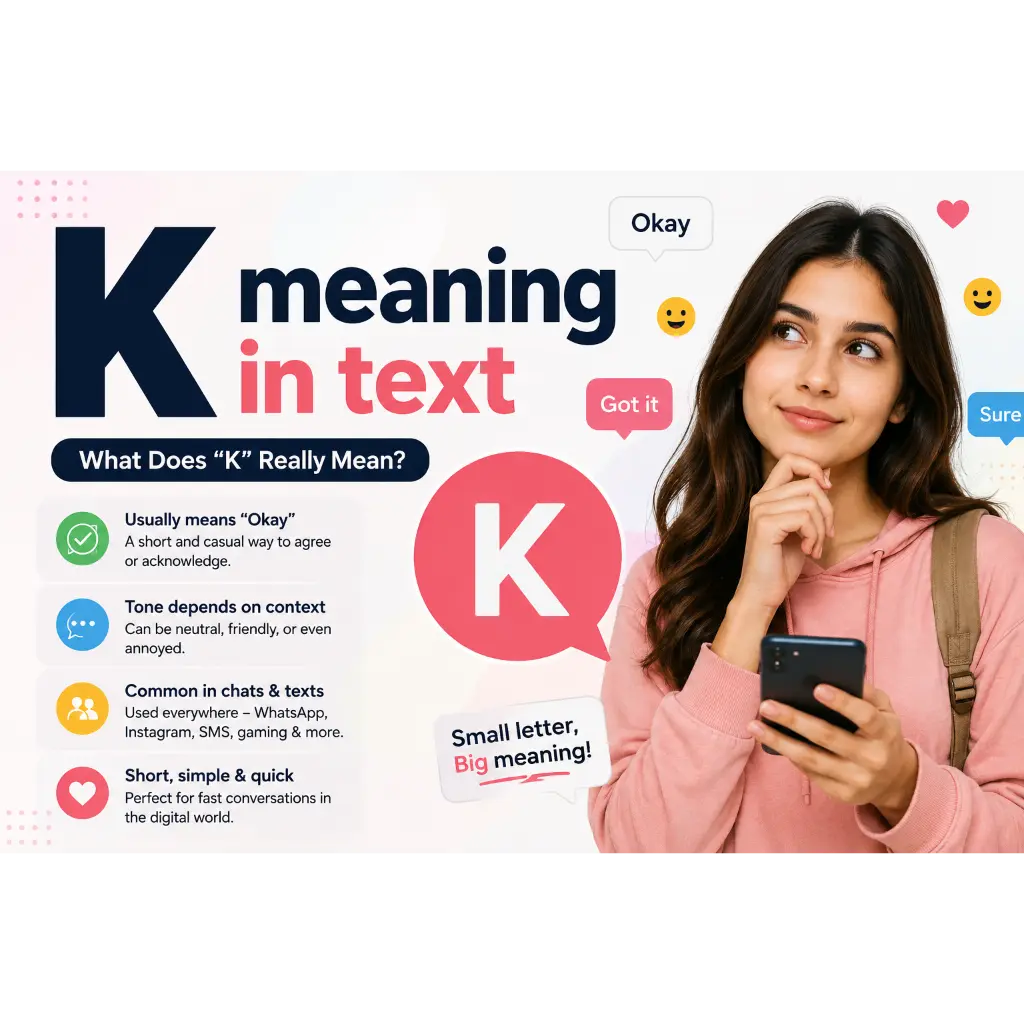
Quick Answer:
K means “Okay,” “OK,” or “Got it.” It is a short and casual way of showing agreement, understanding, or acknowledgment in text messages and online chats.
Even though it is only one letter, the tone behind it can change depending on the situation, relationship, and conversation style.
What Does K Mean in Text?
The slang “K” is simply a shorter version of “OK” or “Okay.” People use it when they want to answer quickly without typing the full word.
It usually means:
- I understand
- Sounds good
- Okay
- Got it
- Message received
For example:
A: “I’ll pick you up at 6.”
B: “k 👍”
Here, “k” means the same thing as saying “okay.”
People often use this slang during fast conversations because it saves time. Instead of typing “okay,” they type only one letter.
Another example:
A: “don’t forget the meeting tomorrow”
B: “k thx”
In this case, the reply means “okay, thanks.”
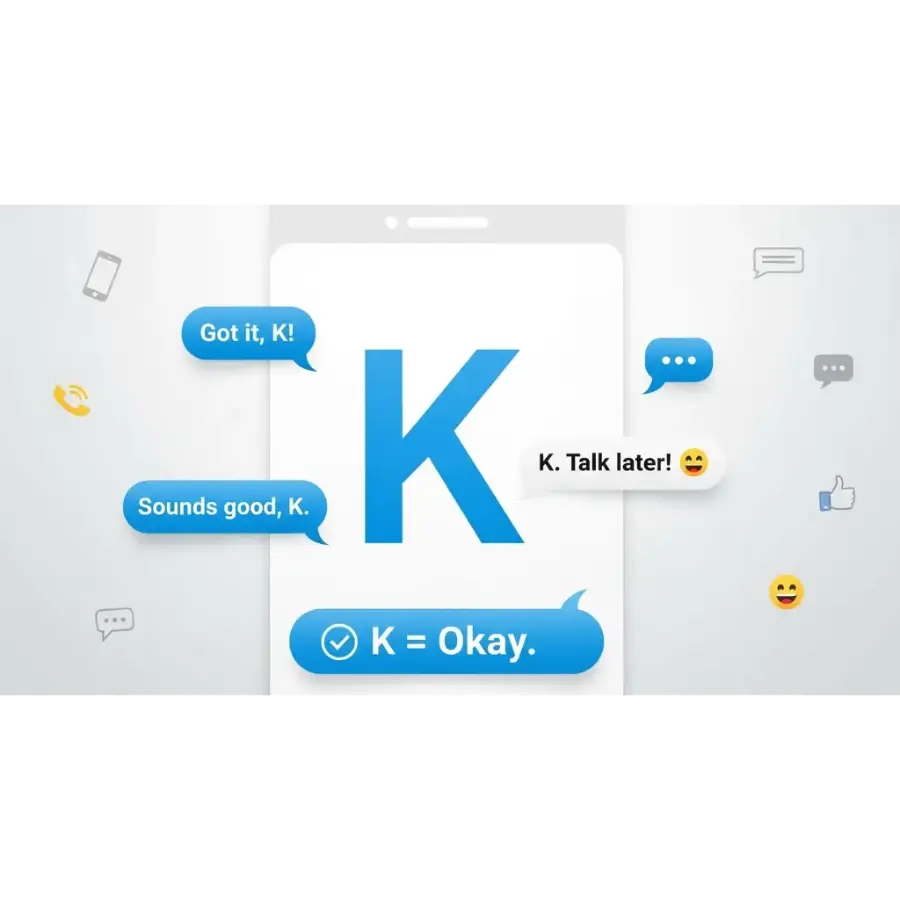
In short: K = Okay = Got it.
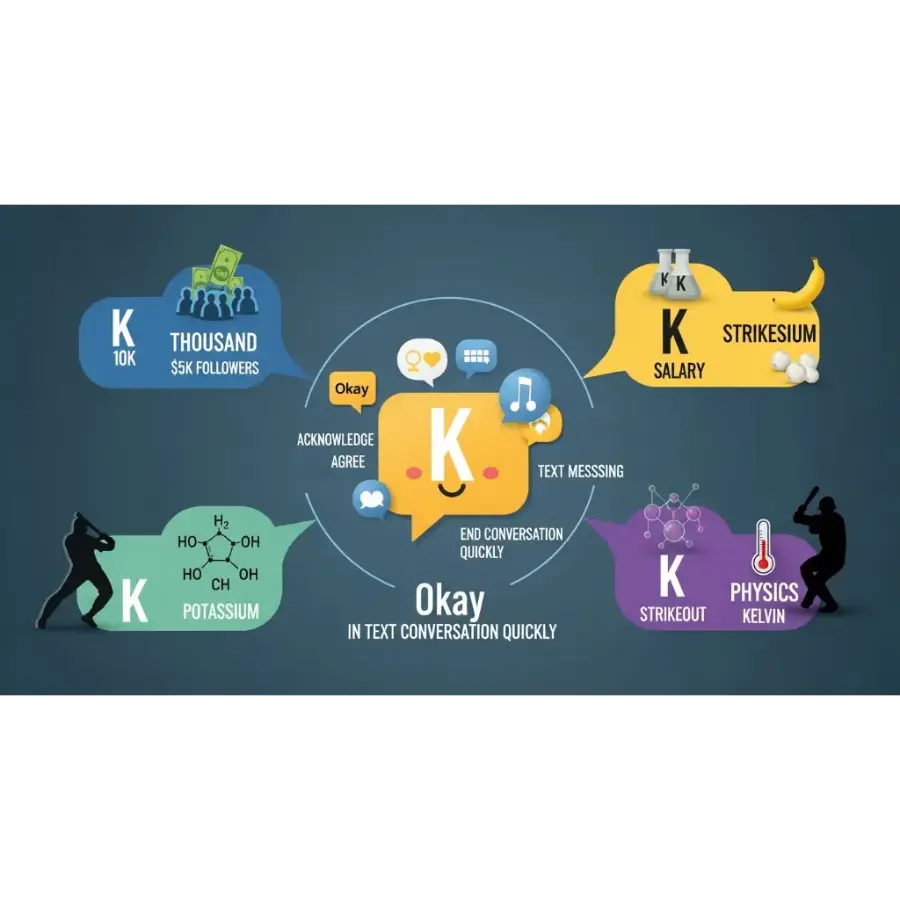
The History of K in Online Texting
The slang “k” became popular during the early days of mobile texting and internet chat rooms. Older phones had smaller keyboards, and typing full words took more time. Because of this, people started shortening common words.
Examples included:
- “u” instead of “you”
- “r” instead of “are”
- “thx” instead of “thanks”
- “k” instead of “okay”
As texting culture grew, these shortcuts became normal on social media platforms and messaging apps.
Today, younger users especially prefer quick and short replies. That is why “k” remains popular even with modern smartphones.
Where Is K Commonly Used? 📱
“K” appears almost everywhere online because it is simple and fast.
Here are the platforms where people commonly use it:
- 📱 Text messages
- 👻 Snapchat
- 🎵 TikTok comments and DMs
- 📸 Instagram chats
- 💬 Discord servers
- 🎮 Gaming chats
- 🧑🤝🧑 Group chats
- 💙 Messenger
Tone of “K”
| Situation | Tone |
|---|---|
| Friends chatting | Casual |
| Gaming chats | Quick and practical |
| Fast replies | Neutral |
| Social media DMs | Relaxed |
| Arguments | Possibly rude |
| Work conversations | Too informal |
“K” is considered casual slang. It is best for relaxed online conversations, not formal communication.
Examples of K in Conversation 💬
Below are realistic examples of how people use “k” in texting.
Example 1
A: “movie starts at 8”
B: “k see u there”
Example 2
A: “i sent the assignment”
B: “k got it 👍”
Example 3
A: “can u bring snacks?”
B: “k lol”
Example 4
A: “goodnight 😊”
B: “k gn”
Example 5
A: “i’ll call later”
B: “k”
Example 6
A: “we’re waiting outside”
B: “k coming”
Example 7
A: “wanna play now?”
B: “k 🎮”
These examples show that “k” is usually friendly and casual. However, tone can still change depending on the conversation.
Is K Rude in Text?
One of the most common questions people ask is:
“Is saying ‘k’ rude?”
The answer depends on context.
Sometimes “k” is completely normal. Other times, it may feel cold or dismissive.
For example:
Friendly Version
“k 😂”
This feels playful and relaxed.
Neutral Version
“k”
This feels short but acceptable.
Cold Version
“K.”
Adding a period can sometimes make the message feel annoyed or angry.
That is why many people overthink this reply. Text messages do not include facial expressions or voice tone, so small details matter more.
Why Does K Sometimes Feel Cold?
“K” can feel cold because it is very short. When someone writes only one letter, it may seem like they do not want to continue the conversation.
For example:
A: “i’m really sorry about yesterday”
B: “k”
This reply may feel distant or upset.
In emotional conversations, longer replies usually sound kinder and more caring.
Better replies include:
- “okay, i understand”
- “it’s alright”
- “got it 😊”
These sound warmer than a simple “k.”
When to Use and When Not to Use K
✅ When to Use “K”
Use “k” in these situations:
- Casual chats with friends
- Quick replies
- Gaming conversations
- Confirming simple plans
- Group chats
- Fast texting moments
Examples:
- “k sounds good”
- “k thanks”
- “k see u later”
❌ When Not to Use “K”
Avoid using “k” when:
- Writing professional emails
- Talking to teachers or bosses
- Having emotional conversations
- Handling serious situations
- Trying to sound polite and warm
In these situations, full words sound better.
Examples:
- “Okay, thank you.”
- “I understand.”
- “Sounds good.”
Context Comparison Table
| Context | Example Phrase | Why It Works |
|---|---|---|
| Friend Chat | “k 😄” | Casual and quick |
| Gaming Chat | “k go now” | Fast communication |
| Family Chat | “k mom” | Simple acknowledgment |
| Group Chat | “k sounds good” | Easy confirmation |
| Work Chat | “Okay, understood.” | Professional tone |
| “Please review this when possible.” | Formal and respectful | |
| Emotional Talk | “I understand how you feel.” | More caring |
Why Do People Use K Instead of OK?
People prefer “k” because it is:
- Faster to type
- Common in texting culture
- Easy during busy conversations
- Popular among younger users
- Useful in gaming chats
Short slang saves time online.
The same thing happens with other internet slang terms like:
| Slang | Full Meaning |
|---|---|
| BRB | Be Right Back |
| IDK | I Don’t Know |
| LOL | Laugh Out Loud |
| TBH | To Be Honest |
| GMFU | Got Me F***ed Up |
These shortcuts became popular because online communication moves quickly.
Different Versions of K and Their Meanings
There are several variations of “k” online.
| Version | Meaning or Tone |
|---|---|
| k | Okay |
| kk | Friendly okay |
| kay | Cute or softer tone |
| K. | Cold or annoyed |
| mkay | Playful agreement |
| okayyy | Excited response |
Example
A: “see u tomorrow 😊”
B: “kk”
This sounds friendlier than just “k.”
K vs OK vs KK
Many people wonder about the difference between these three replies.
| Reply | Tone |
|---|---|
| K | Short and casual |
| OK | Neutral |
| KK | Warm and friendly |
“K”
Very short. Sometimes feels dry.
“OK”
Clear and balanced.
“KK”
More cheerful and social.
People often use “kk” to avoid sounding rude.
Is K Flirty?
Usually, “k” is not considered flirty.
However, emojis and tone can change the feeling.
Not Flirty
“k thanks”
Friendly
“k 😊”
Slightly Flirty
“k ❤️”
Dry or Annoyed
“K.”
So the meaning depends heavily on context and relationship.
Common Mistakes When Using K
Here are common texting mistakes involving “k.”
1. Using It During Serious Conversations
If someone shares emotional news, replying with only “k” can feel insensitive.
2. Using It in Professional Settings
Work messages usually require more polite wording.
Instead of:
- “k”
Say:
- “Okay, thank you.”
3. Misunderstanding Tone
Not every “k” means anger. Sometimes the person is simply busy.
Similar Slang Words or Alternatives 🔄
Here are slang alternatives similar to “k.”
| Slang | Meaning | When to Use |
|---|---|---|
| OK | Okay | Neutral chats |
| KK | Okay okay | Friendly texting |
| Bet | Sounds good | Casual agreement |
| Sure | Agreement | Everyday chats |
| Gotcha | I understand | Informal conversations |
| Aight | Alright | Relaxed slang |
These alternatives may sound warmer or more expressive than “k.”
What Does GMFU Mean? 🤔
Another popular slang term people search online is GMFU.
GMFU Meaning
GMFU stands for:
“Got Me Fed Up.”*
People use it when they feel:
- Shocked
- Angry
- Confused
- Disrespected
Example:
“u canceled again? gmfu 😭”
The slang is emotional and casual. It is common on social media and meme culture.
In short: GMFU = “Got Me Fed Up” = You upset or shocked me.*
Related Slang Terms
Here are some other popular internet slang words related to texting culture:
| Slang | Meaning |
|---|---|
| TBH | To Be Honest |
| IMO | In My Opinion |
| NGL | Not Gonna Lie |
| WYD | What You Doing |
| BRB | Be Right Back |
| IDK | I Don’t Know |
| FR | For Real |
These slang words are widely used across social media platforms.
Entities Related to K Meaning in Text
Important entities connected to this slang include:
- Snapchat
- TikTok
- Discord
- Messenger
These platforms helped popularize short texting slang like “k.”
FAQs About K Meaning in Text ❓
Does K Mean Okay?
Yes. “K” is a shortened version of “Okay” or “OK.”
Is K Rude?
Sometimes. Tone and context matter.
What Does K Mean From a Girl?
Usually, it simply means “okay.” But in emotional conversations, it may sound cold.
What Does K Mean From a Guy?
Most of the time, it means “got it” or “okay.”
Is K Better Than OK?
“OK” sounds clearer and more neutral. “K” is shorter and more casual.
What Does KK Mean?
“KK” means “okay okay” and sounds friendlier than “k.”
Is K Used on Snapchat?
Yes. It is very common on Snapchat and other messaging apps.
Final Thoughts 💭
“K” may be only one letter, but it carries different meanings depending on tone and context. Most of the time, it simply means “okay,” “got it,” or “I understand.” It is one of the fastest and most common replies in online communication today.
Still, texting tone matters a lot. In casual chats, “k” feels normal and easy. In emotional or professional conversations, though, it may sound cold or dismissive.
If you want to sound warmer, adding emojis or extra words can help:
- “k 😊”
- “kk”
- “okay sounds good”
Small texting choices can completely change how your message feels online.

Dave Barry is a slang and modern language writer who explains internet terms, texting abbreviations, and social media phrases in a simple way. He creates easy-to-understand guides on trending slang, online expressions, and digital communication. His writing helps readers quickly understand modern English used in chats and social platforms. At Meanifiy, Dave Barry shares fun and informative slang meaning content for everyday readers.