WBU Meaning in Text: What It Means & How to Use It
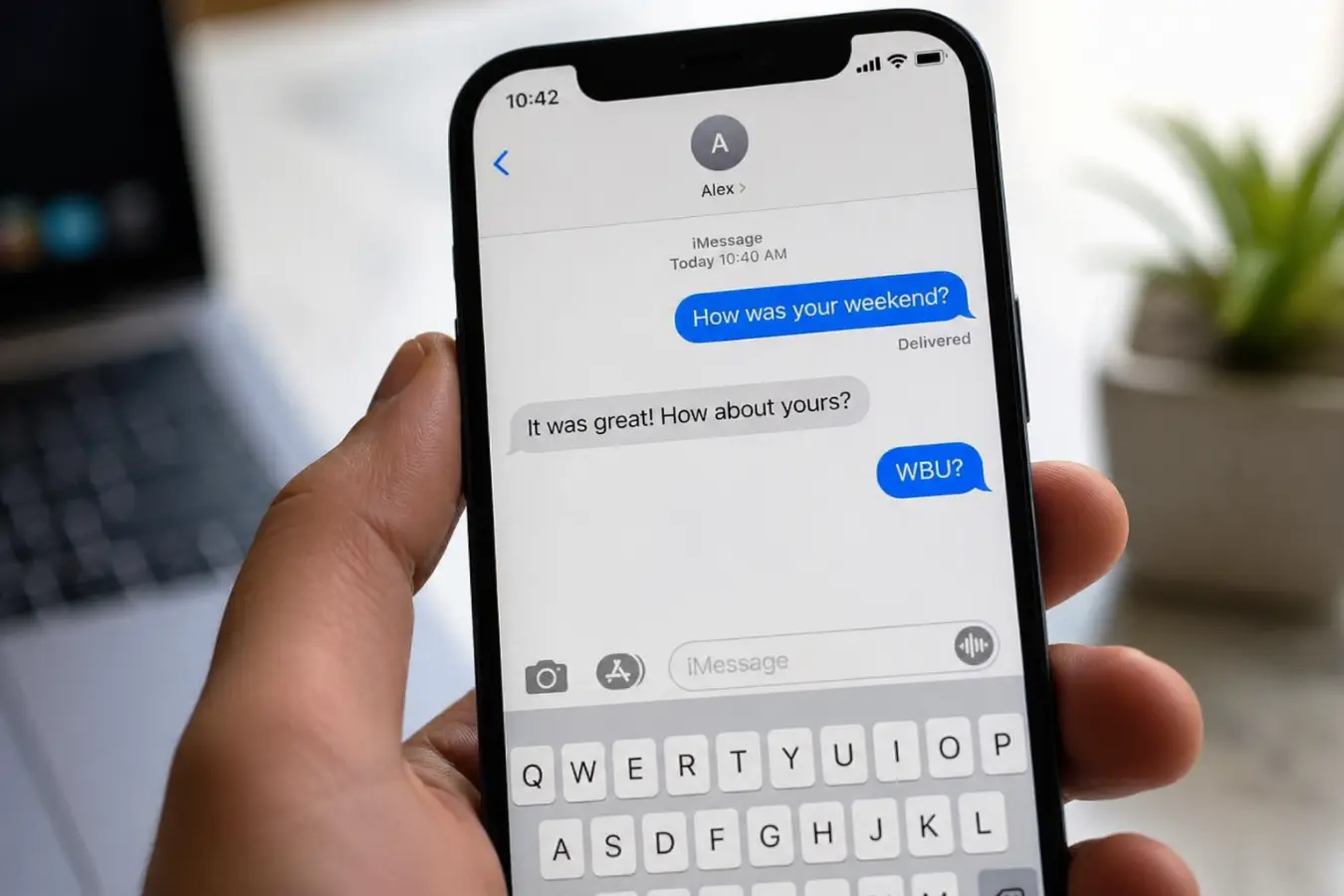
If someone sends me “WBU?” in a text, I may understand the message quickly, but I might still wonder about the exact tone.
Does it simply mean they want my answer, or is there something more behind it? In most everyday conversations, WBU is a short and casual way to ask “What about you?”
I usually see this abbreviation in texting, social media messages, and casual online conversations. People use it when they have already answered a question and want the other person to respond.
For example, if someone says, “I’m doing good, WBU?” they are simply asking how I am doing.
Because WBU is so short, its meaning can sometimes depend on the conversation around it. It is also easy to confuse with other abbreviations if I have never seen it before.
⚡ Quick Answer:
WBU Meaning in Text “What about you?” It is most commonly used in casual texts and online chats when someone wants to ask the same question back.
WBU generally has one main meaning in texting, although the abbreviation can have other meanings in unrelated contexts.
For example:
“I’m staying home tonight. WBU?”
This simply means:
“I’m staying home tonight. What about you?”
What Does WBU Mean in Text?
In texting and online communication, WBU means “What about you?”
It is usually used as a quick follow-up question. Instead of typing the full phrase, someone can write WBU to keep the conversation short.
For example:
“I’m watching a movie. WBU?”
This means:
“I’m watching a movie. What about you?”
The abbreviation does not normally change the meaning or emotion of the question. It simply makes the message faster to type.ntence.
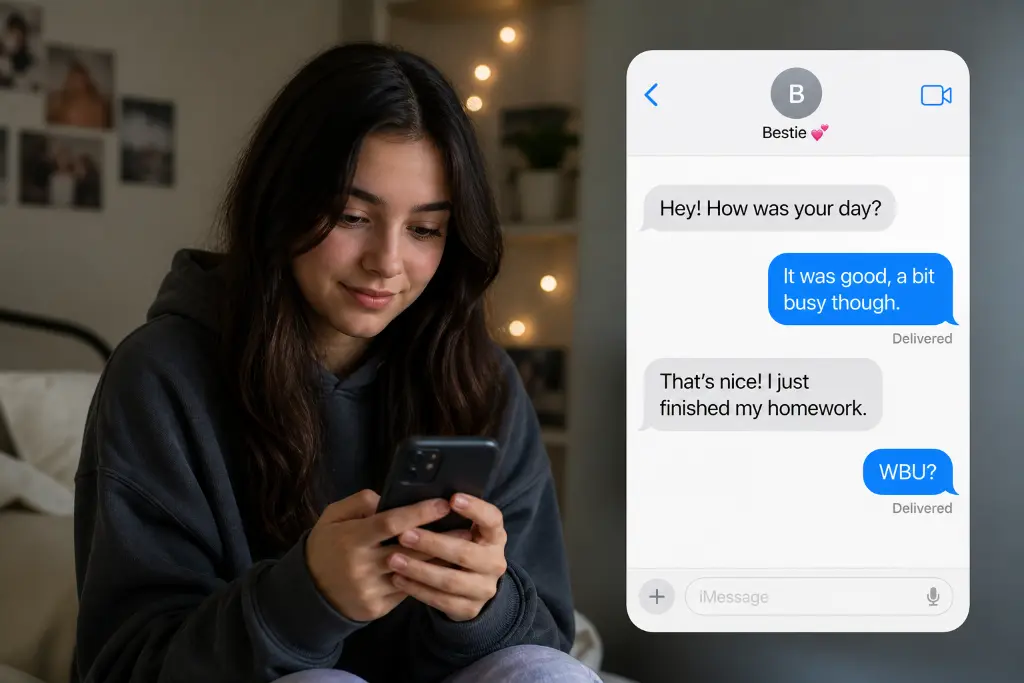
Full Form / Definition of WBU
The full form of WBU is:
WBU = What About You?
It is commonly used after someone has answered a question and wants the other person to answer the same question.
For example:
Person 1: “I’m from Lahore. WBU?”
Meaning: “I’m from Lahore. What about you?”
Here, WBU simply turns the question back to the other person.
WBU full form in chat: “What About You?”
Example: “I’m good, WBU?” = “I’m good, what about you?”
It’s a common casual texting abbreviation used on WhatsApp, Instagram, Snapchat, and other chats.
Is WBU slang?
Yes. WBU is best described as a casual texting abbreviation or internet abbreviation. It is not normally used in formal writing.
You are more likely to see it in a private message than in a school essay, business report, formal email, or professional document.
WBU Meaning in Different Contexts
WBU in texting
Texting is probably the most common place to encounter WBU. It helps people give quick replies without typing a complete sentence.
Example:
“Just finished dinner. WBU?”
WBU on Snapchat
On Snapchat, WBU can have the same casual meaning. Someone might use it after answering a question about what they are doing or where they are going.
Example:
“Heading home rn, WBU?”
Here, rn means “right now,” while WBU means “what about you?”
WBU on Instagram
WBU can also appear in Instagram DMs and comments when the conversation is casual.
Example:
“I love this song. WBU?”
The person is asking whether you like the song too.
WBU on WhatsApp
WBU is also natural in WhatsApp chats, especially among friends and people who regularly use texting abbreviations.
Example:
“I’m free after 7. WBU?”
The person is asking about your availability.
Is It Rude, Offensive, or Neutral?
WBU is generally neutral and friendly.
However, tone matters:
- ✅ Friendly: “I’m good, WBU?”
- ⚠️ Slightly lazy or disinterested: replying only “WBU” without context
It’s not offensive, but overusing it without adding value can seem uninterested.
Where Is It Commonly Used?
You’ll often see WBU on:
- Text messages (SMS)
- Social media platforms
- Chat apps like WhatsApp or Messenger
- Online gaming chats
It’s mostly used in informal communication, not professional emails.
What Does WBU Mean in a Conversation?
WBU usually acts as a conversational handoff.
One person gives an answer, then WBU gives the other person a chance to respond.
For example:
Alex: “I’m feeling much better today. WBU?”
Alex has shared their own situation and now wants to know how the other person feels.
It can also replace phrases such as:
- “And you?”
- “How about you?”
- “What about you?”
- “What are your plans?”
- “What do you think?”
The exact interpretation comes from the context.
WBU Can Ask Different Things
Consider these examples:
“I’m from Chicago. WBU?”
This asks where the other person is from.
“I’m watching a comedy. WBU?”
This asks what the other person is watching or doing.
“I think the new update is better. WBU?”
This asks for the other person’s opinion.
“I’m nervous about tomorrow. WBU?”
This asks how the other person feels about the situation.
That is why reading the whole message matters.
Emotional and Psychological Meaning
Using WBU shows:
- Interest in the other person
- A desire to continue conversation
- Social engagement
It creates a two-way communication flow, which is important for building connections.
Deeper Understanding of WBU in Modern Digital Communication
WBU (“What About You?”) is more than just a shortened phrase. In modern digital communication, it works as a quick way to keep a conversation balanced and invite the other person to share their own thoughts, feelings, plans, or experiences.
For example, if I text “I’m doing pretty well today, WBU?”, I am not simply asking a question—I am showing that I want the conversation to continue by giving the other person a chance to respond.
Because WBU is short and informal, it fits naturally into fast-paced conversations on messaging apps and social media. Its meaning usually stays the same, but its tone depends on the surrounding conversation.
In a friendly chat, it can sound relaxed and natural. In a very short reply, however, it may sometimes feel brief or less expressive.
WBU also reflects how people adapt language for digital communication. Instead of writing the complete “What about you?”, users shorten the phrase to save time and keep messages conversational.
This makes WBU especially common in casual texting, where speed and simplicity often matter more than formal grammar.
Is WBU Safe for Kids to Use?
Yes. WBU (“What About You?”) is a harmless texting abbreviation and does not have an inherently offensive or inappropriate meaning. It is simply a casual way to ask another person the same question back.
For example:
“I’m watching a movie, WBU?”
This simply means:
“I’m watching a movie. What about you?”
The important point is that the word itself is not a safety concern. However, the conversation around it can still matter. If someone uses WBU to ask a young person for private information—such as their exact location, school, personal photos, or other sensitive details—the issue is the request and the person asking, not the abbreviation WBU.
Bottom line:
Kids can use WBU in ordinary casual conversations. They should still follow normal online-safety habits and avoid sharing private information with people they do not know or trust.
Common Misunderstandings About WBU
1. Thinking WBU Is Always Flirty
It is not.
WBU can appear in a romantic conversation, but it is also completely normal between friends, classmates, coworkers, and family members.
2. Assuming It Means “What’s Up Bro”
This is not the standard texting definition.
The usual meaning is “What About You?”
3. Thinking It Is Rude
WBU is not inherently rude.
A short message can sometimes feel cold, but that depends on the overall conversation.
4. Assuming WBU Always Asks About Feelings
Not necessarily.
WBU can ask about plans, opinions, activities, experiences, preferences, or other details.
Origin of WBU
The exact origin date of WBU as a texting abbreviation is not clearly documented.
It belongs to the broader tradition of shortening common phrases in digital communication. Texting and online chat encouraged users to create shorter forms that could be typed quickly.
Because the abbreviation has been used across different forms of online messaging, it is safer to describe its origin as unconfirmed rather than assigning it to a specific person, website, or year.
The important point is that WBU developed as a convenient shorthand for the familiar conversational phrase “What About You?”
Comparison with Similar Slang
Here’s how WBU compares with similar terms:
| Slang | Full Form | Meaning | Usage Tone |
|---|---|---|---|
| WBU | What About You | Asking back a question | Casual |
| HBU | How About You | Similar to WBU | Friendly |
| WYD | What You Doing | Asking current activity | Informal |
| HMU | Hit Me Up | Asking someone to contact | Casual |
When to Use and When to Avoid
✅ Use WBU when:
- Chatting with friends
- Messaging casually
- Keeping conversations going
❌ Avoid WBU when:
- Writing professional emails
- Talking to someone formally
- In serious or emotional discussions (can feel too casual)
Realistic WBU Texting Examples
Here are some natural examples of how people may use WBU.
1. Asking About Plans
Friend 1: “I’m going to the mall after work. WBU?”
Friend 2: “Probably heading home.”
2. Asking About Feelings
Friend 1: “I’m feeling pretty tired today. WBU?”
Friend 2: “Same. I barely slept.”
3. Asking About Food
Friend 1: “I’m having pizza for dinner. WBU?”
Friend 2: “I’m making pasta.”
4. Asking About Hobbies
Friend 1: “I’ve been playing this new game all week. WBU?”
Friend 2: “I’ve mostly been watching movies.”
5. Asking for an Opinion
Friend 1: “I think the blue one looks better. WBU?”
Friend 2: “Yeah, I agree.”
6. Casual Check-In
Friend 1: “I’m doing okay after the exam. WBU?”
Friend 2: “Honestly, I’m still stressed.”
7. Flirty Context
Person 1: “I’m free Saturday night 👀 WBU?”
Person 2: “I might be free too.”
Here, WBU itself is not necessarily flirty. The surrounding conversation and emoji create that tone.
Synonyms of WBU
Since WBU is an abbreviation for “What About You?”, it does not have traditional synonyms. However, several phrases can be used in its place:
- What about you? — the full form of WBU
- How about you? — very common alternative
- And you? — short and natural
- What about yourself? — slightly more conversational
- How are things with you? — more conversational
- What do you think? — useful when asking for someone’s opinion
- What are you up to? — useful when asking about someone’s current activity
Example
“I’m doing great, WBU?”
can also be written as:
“I’m doing great, how about you?”
“I’m doing great, and you?”
For casual texting, “How about you?” and “And you?” are the closest alternatives to WBU.
Polite Alternatives
If you want to sound more polite or formal:
- “What about you?”
- “How about you?”
- “And you?”
- “What do you think?”
Why People Use This Slang
People use WBU because:
- It saves time
- It feels casual and friendly
- It keeps conversations interactive
- It’s widely understood online
Impact of Using Slang in Communication
Using slang like WBU:
- ✅ Makes conversations faster and relaxed
- ❌ Can reduce clarity in formal situations
Balance is key—use it where appropriate.
Is It Safe for Social Media?
Yes, WBU is completely safe to use on social media. It’s:
- Non-offensive
- Widely accepted
- Easy to understand
Just ensure your audience is comfortable with casual language.
Examples Section
Friendly Tone
- “I’m excited for the weekend, WBU?”
Casual Tone
- “Just chilling, WBU?”
Argumentative Tone
- “I already explained my side, WBU?”
Different Contexts
- Work: “I finished my task, WBU?”
- Social: “I’m going out tonight, WBU?”
Common Misunderstandings
- Some think WBU means something complex, but it’s simple
- It can be confused with HBU (same meaning, different wording)
Variations and Types
- HBU – How About You
- WB – Welcome Back (different meaning)
- WBY – What About You (less common)
How to Respond When Someone Uses It
You can respond by:
- Answering their question
- Continuing the conversation
Example:
- “I’m good too, just relaxing!”
Regional and Cultural Usage
WBU is used globally, especially among:
- Younger audiences
- Social media users
- English-speaking communities
In non-English regions, it’s still widely understood online.
WBU vs. WYD: What’s the Difference?
These two abbreviations are easy to confuse.
WBU = What About You?
WYD = What You Doing? / What Are You Doing?
Consider:
“I’m watching a movie. WBU?”
This asks what you are doing or what your situation is.
But:
“WYD?”
directly asks:
“What are you doing?”
WBU is broader. It can ask about your plans, feelings, opinions, location, or experience.
Does WBU Mean “What’s Up Bro”?
You may occasionally see people jokingly interpret WBU as “What’s Up Bro.”
That is not the standard texting meaning.
In ordinary texting, WBU means “What About You?”
Context can always change how an abbreviation is understood, but the sentence structure is a strong clue.
For example:
“I’m having coffee. WBU?”
Clearly asks:
“What about you?”
It does not naturally mean “What’s up, bro?”
Common Misunderstandings About WBU
1. Thinking WBU Is Always Flirty
It is not.
WBU can appear in a romantic conversation, but it is also completely normal between friends, classmates, coworkers, and family members.
2. Assuming It Means “What’s Up Bro”
This is not the standard texting definition.
The usual meaning is “What About You?”
3. Thinking It Is Rude
WBU is not inherently rude.
A short message can sometimes feel cold, but that depends on the overall conversation.
4. Assuming WBU Always Asks About Feelings
Not necessarily.
WBU can ask about plans, opinions, activities, experiences, preferences, or other details.
Does WBU Have a Different Meaning From a Girl or Guy?
Usually, no.
If a girl sends “WBU?” or a guy sends “WBU?”, the basic meaning remains “What about you?”
The important clue is the surrounding conversation, not the person’s gender.
For example:
“I’m good, WBU?”
This normally means exactly what it says: the person is asking how you are.
It does not automatically mean that the person is flirting, interested romantically, annoyed, or bored. Those meanings cannot be determined from WBU alone
Key Takeaways
- WBU means “What About You?”
- It is mainly used in casual texting and online conversations.
- People use it to ask for the other person’s answer, opinion, plans, or feelings.
- WBU is normally neutral and friendly, not rude.
- HBU is a very similar abbreviation.
- Avoid WBU in formal or professional writing.
- Context determines exactly what the sender wants to know.
FAQs
What does WBU mean in texting?
WBU means “What about you?” It is commonly used in casual text messages and online chats when someone wants to ask the same question back.
What does WBU stand for?
WBU stands for “What About You?”
Is WBU slang?
Yes. WBU is an informal texting abbreviation rather than a formal English expression.
What does WBU mean from a girl?
It normally means exactly “What about you?” The abbreviation itself does not indicate that she is flirting or romantically interested.
What does WBU mean from a guy?
It normally means “What about you?” The context of the conversation matters more than the abbreviation itself.
Is WBU the same as HBU?
They are very similar. WBU means “What About You?”, while HBU means “How About You?” Both are commonly used to return a question to another person.
Can I use WBU at work?
You can use it in a very casual workplace chat if that communication style is normal for your team. For formal emails and professional documents, “What about you?” is a better choice.
Is WBU rude?
No. WBU is generally neutral and casual. However, because it is very short, it can sometimes seem less warm than a complete sentence depending on the conversation.
Conclusion
Understanding the WBU meaning in text helps you communicate more effectively in today’s digital world. It simply means “What About You?” and is used to keep conversations interactive and engaging.
While it’s a friendly and useful slang term, always consider context and tone before using it. Stick to casual settings, and switch to full phrases in formal communication.
Mastering small slang terms like WBU can make a big difference in how natural and connected your conversations feel.

Dave Barry is a slang and modern language writer who explains internet terms, texting abbreviations, and social media phrases in a simple way. He creates easy-to-understand guides on trending slang, online expressions, and digital communication. His writing helps readers quickly understand modern English used in chats and social platforms. At Meanifiy, Dave Barry shares fun and informative slang meaning content for everyday readers.