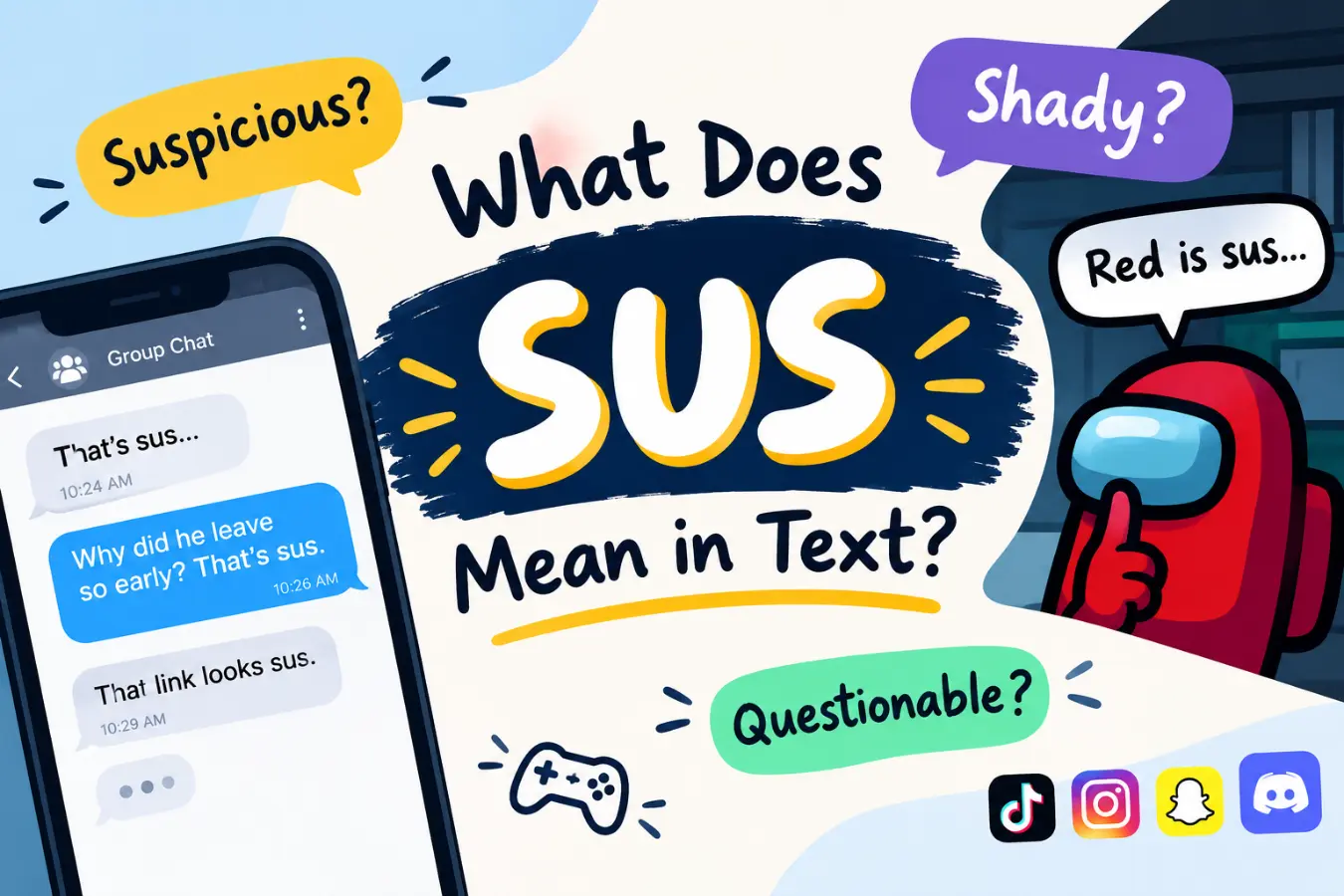
If you have seen someone reply “sus,” “that’s sus,” or “you’re acting sus” in a text, comment, or game chat, you may wonder what they actually mean. Sus is a popular piece of internet and texting slang used when something or someone seems suspicious, questionable, strange, or hard to trust.
You will often see it in group chats, social media comments, gaming conversations, memes, and casual texts. Its popularity grew sharply through online gaming, especially Among Us, but the word itself existed as a shortened form related to suspicious or suspect before the game became popular.
Quick Answer:
Sus means “suspicious” or “suspect” in slang. People use it when a person, action, explanation, message, or situation seems strange or questionable. The main modern meaning is consistent, although the tone can range from playful teasing to genuine doubt.
What Does “Sus” Mean in Slang?
In everyday internet slang, sus means that something seems suspicious, questionable, shady, or not quite right.
It can describe almost anything:
- A person’s behavior
- A strange excuse
- A questionable message
- A suspicious website or link
- An unusual situation
- A claim that seems difficult to believe
- Another player in a game
For example:
“He said he finished the whole project in ten minutes. That’s sus.”
The speaker is saying that the story seems hard to believe.
Another example:
“Why did she suddenly leave when we mentioned the money? Kinda sus.”
Here, sus expresses doubt about someone’s behavior. It does not necessarily prove that the person did anything wrong.
Cambridge defines suspicious around ideas such as feeling doubt, lacking trust, or believing that something may be wrong. That helps explain the core idea behind the slang use of sus.
Is “Sus” Short for “Suspicious”?
Yes. In modern slang, sus is commonly understood as a shortened form of suspicious, and it can also be connected with suspect.
However, Among Us did not invent the word. Dictionary sources document older uses of sus as slang, while the game helped bring the expression to a much larger internet audience.
So if someone tells you that sus only means “the Impostor in Among Us,” that is too narrow. The broader meaning is simply that something or someone seems suspicious.
Why Did “Sus” Become So Popular?
Gaming played a major role in making sus widely recognizable.
In Among Us, players try to identify the hidden Impostor among the crew. During discussions, players may accuse another player of behaving suspiciously by saying things such as:
“Red is sus.”
That means the speaker suspects Red may be the Impostor.
As Among Us became a major online phenomenon, sus moved beyond the game. People began using it in memes, social media posts, group chats, comments, and ordinary conversations. The game popularized an existing slang term rather than creating it from scratch.
Sus Meaning in Texting
In texting, sus is a quick and casual way to show doubt.
You might receive:
“That website is sus.”
This means the website looks suspicious or untrustworthy.
Or someone might simply text:
“Sus 👀”
That can mean:
“Hmm… something seems suspicious here.”
Common expressions include:
- That’s sus — That seems suspicious.
- You’re sus — Your behavior seems suspicious.
- Acting sus — Behaving strangely or suspiciously.
- Kinda sus — A little suspicious.
- Pretty sus — Quite suspicious.
- Very sus — Clearly questionable.
- Sus behavior — Behavior that seems suspicious.
The shortness of the word makes it especially useful in fast-moving chats.
Sus Can Be Serious or Playful
One of the most important things to understand about sus is that it does not always represent a serious accusation.
Among friends, it can simply be a joke.
Example:
Maya: “I definitely didn’t eat the last slice of pizza.”
Leo: “Hmm… you’re sus.”
Leo may not seriously believe Maya stole the pizza. He is teasing her.
But the same word can be more serious in another situation:
Alex: “This seller wants payment before sending any details.”
Sam: “That sounds sus. I wouldn’t trust it.”
Here, sus communicates genuine concern.
So the surrounding conversation and tone matter.
Sus in Gaming
Gaming is one of the contexts most strongly associated with sus.
In Among Us, players use it when they suspect another player of being the Impostor:
“Blue is sus. I saw Blue near the body.”
Outside Among Us, gamers can also use the word more generally:
“That player is acting sus.”
This might mean the player is behaving strangely, cheating, hiding something, or simply doing something unexpected.
The gaming meaning is therefore not a completely different definition. It is the same basic idea of suspicion, applied to gameplay.
Sus on Social Media
You can also see sus in comments, captions, memes, and short-form content.
For example:
“That explanation is sus 😂”
or:
“This giveaway looks sus.”
On social media, the word is often humorous. Someone might call an obviously exaggerated video sus without seriously accusing the creator of wrongdoing.
The term can also appear on platforms such as TikTok, Instagram, Reddit, Discord, and other online communities where informal slang is common.
Real Conversation Examples
1. Questionable excuse
A: “He said his phone died, but he was online five minutes later.”
B: “That’s pretty sus.”
Meaning: His excuse seems suspicious.
2. Friendly teasing
A: “Why are you hiding your phone?”
B: “No reason.”
A: “Okayyy… sus.”
Meaning: “That seems suspicious,” probably in a joking way.
3. Suspicious link
A: “I got this message saying I won a free laptop.”
B: “That link looks sus. Don’t click it.”
Meaning: The link seems potentially unsafe or untrustworthy.
4. Gaming
Player 1: “I saw Green leave the room.”
Player 2: “Green is sus.”
Meaning: The player suspects Green.
Sus vs. Suspicious vs. Sketchy
These words are related, but they are not identical in tone.
| Term | Meaning | Tone |
|---|---|---|
| Sus | Seems suspicious or questionable | Very casual |
| Suspicious | Creates doubt or distrust | Neutral/formal |
| Sketchy | Seems unsafe, dishonest, or unreliable | Informal |
| Shady | Seems dishonest or questionable | Informal |
| Fishy | Seems unlikely or suspicious | Informal |
For example:
- “That deal is sus.” — Casual internet slang.
- “That deal is suspicious.” — More neutral.
- “That deal looks sketchy.” — Informal and suggests possible risk.
If you are writing an email, report, application, or other formal document, suspicious or questionable is usually a better choice.
Is “Sus” an Insult?
Not automatically.
Calling someone sus can be playful, especially between friends. But it can also sound accusatory when used during a serious disagreement.
Compare:
“Bro, you’re sus 😂”
with:
“Your explanation is sus.”
The first may be obvious teasing. The second could suggest genuine doubt.
If you are speaking to someone you do not know well, remember that slang can be interpreted differently depending on the situation.
Common Misunderstandings About “Sus”
Sus does not always mean someone is guilty
Calling something sus means it seems suspicious. It does not prove that someone has done something wrong.
Sus is not only a gaming term
Although gaming helped spread the word, people now use sus in texts, memes, comments, and casual conversations too.
Sus is not the same as “suss out”
These words look similar but have different uses.
Sus: suspicious.
“That story is sus.”
Suss out: figure something out or discover the truth.
“I’ll suss out what happened.”
When Should You Use “Sus”?
Sus works best in informal communication, such as:
- Text messages
- Group chats
- Gaming chats
- Social media comments
- Memes
- Casual conversations with friends
Avoid it in formal communication when you need a professional tone. Instead of:
“This report looks sus.”
you could write:
“This report appears questionable.”
Or:
“Some details in the report require further verification.”
That communicates the idea more clearly in a professional setting.
What Is the Origin of “Sus”?
The modern internet meaning is strongly associated with the popularity of Among Us, but sus existed before the game. Dictionary.com lists sus as slang for “suspicious” and traces its recorded history back much earlier than modern gaming culture.
Among Us was released before its huge 2020 popularity surge, and its social-deduction gameplay gave sus a perfect environment for repeated use. The game then helped push the expression into mainstream internet culture.
The exact history of every modern online use is difficult to trace, so it is more accurate to say that Among Us popularized the slang rather than claiming that it created the word.
Key Takeaways
- Sus usually means suspicious, suspect, or questionable.
- It is common in texting, gaming, memes, and social media.
- Among Us helped make the term widely popular online, but the word existed before the game.
- “That’s sus” means something seems suspicious or not quite right.
- Calling someone sus can be playful or serious depending on the context.
- In formal writing, use suspicious, questionable, or another precise alternative instead.
FAQS:
What does sus mean in slang?
Sus is slang for suspicious or suspect. It describes someone or something that seems questionable, strange, shady, or difficult to trust.
What does sus mean in texting?
In texting, sus usually means that something seems suspicious. For example, “That message is sus” means the message seems questionable or untrustworthy.
What does “that’s sus” mean?
“That’s sus” means “That seems suspicious” or “Something about that doesn’t seem right.” It can be serious or playful.
What does it mean when someone calls you sus?
It means the person thinks your behavior seems suspicious or unusual. Among friends, it is often teasing rather than a serious accusation.
Is sus short for suspicious?
Yes. In modern slang, sus is commonly used as a shortened form of suspicious, with suspect also influencing some uses.
Is sus only used in Among Us?
No. Among Us made the expression much more popular, but sus is now used more broadly in texting, social media, memes, gaming, and casual speech.
Is “sus” rude?
Usually not, but it depends on the situation. Among friends it can be playful. Used toward a stranger or in a serious conversation, it may sound like an accusation.
Can I use sus at work?
It is better to avoid sus in formal workplace communication unless the environment is very casual. Words such as suspicious, questionable, unclear, or concerning are more professional.
Conclusion
The simplest way to understand sus is “something seems suspicious or off.” It is short, informal, and flexible enough to describe a strange excuse, questionable behavior, an unusual online post, or a suspicious move in a game.
While Among Us played a huge role in spreading the term across internet culture, sus is older than the game. Today, its meaning depends less on gaming and more on context: sometimes it signals genuine doubt, and sometimes it is just a funny way to tease a friend.

Tayyab Hassan is a Master’s graduate, content writer, and contributor at Meanifiy.com. He specializes in creating informative, reader-friendly content that simplifies language, meanings, and educational topics. With a commitment to accuracy and clarity, he helps readers understand complex concepts through engaging and accessible articles.