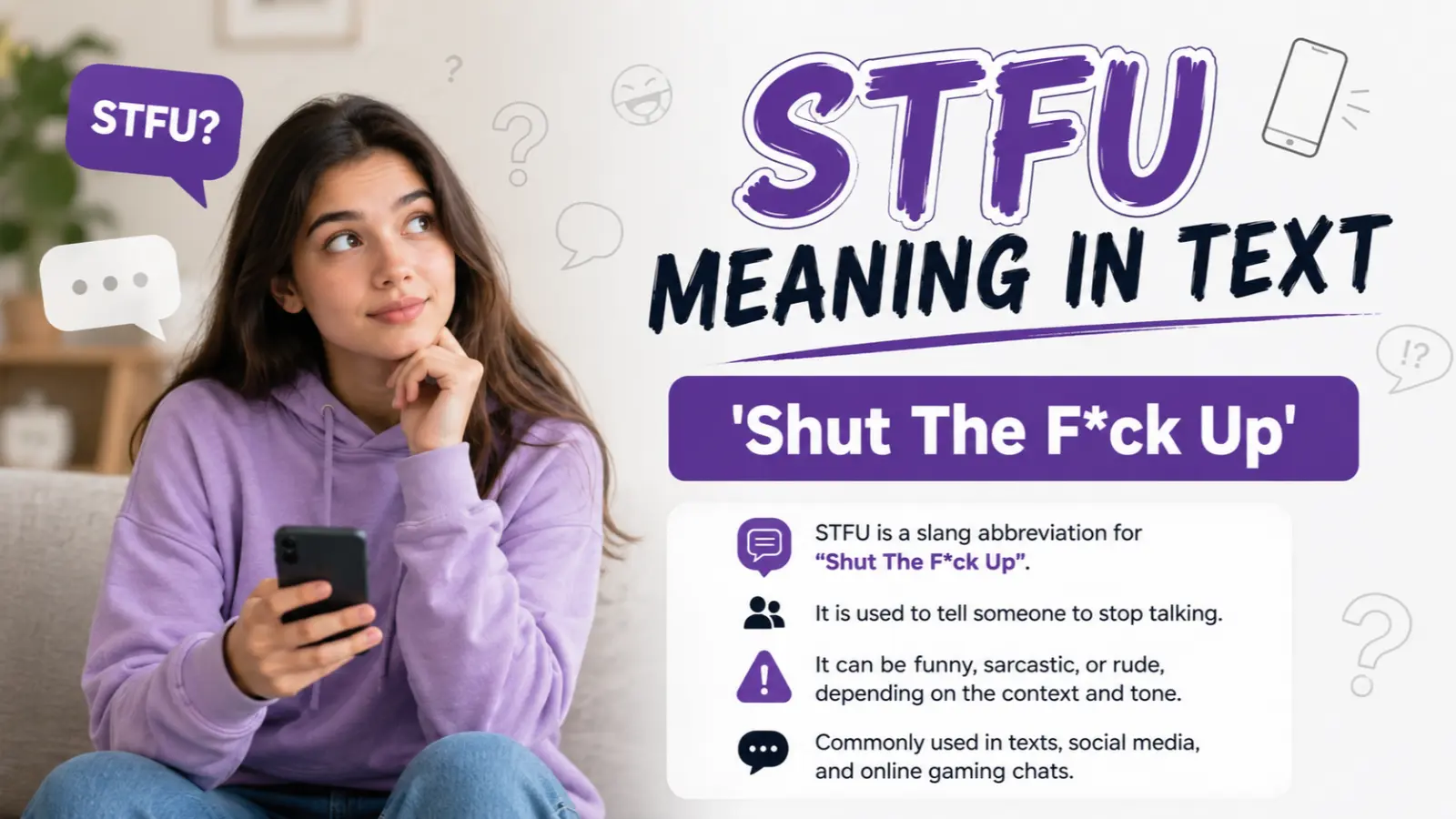
Have you ever received a message that simply says “STFU” and wondered if the person was joking, angry, or actually insulting you? This abbreviation can look confusing at first, especially when it appears in a text, Snapchat message, TikTok comment, or gaming chat.
STFU is a common internet and texting abbreviation. It is usually used when someone wants another person to stop talking. However, the tone can change a lot depending on the situation. Friends may use it playfully, while strangers may use it as a serious insult.
Quick Answer
STFU means “Shut the Fuck Up.” It is a vulgar and very informal way to tell someone to stop talking or be quiet. The phrase has one overwhelmingly common meaning in texting and online communication, although people may sometimes use it jokingly among close friends.
What Does STFU Meaning in Text?
STFU stands for “Shut The F*ck Up.”
It is a popular internet abbreviation used to tell someone to stop speaking. Because it contains a swear word, STFU is generally considered a strong and aggressive expression.
People commonly use it in:
- Text messages
- Snapchat
- Instagram comments
- TikTok
- Discord
- Gaming chats
- X (formerly Twitter)
- Facebook Messenger
Although the abbreviation hides part of the profanity, most English speakers immediately recognize what it means.
SYFM Meaning in Text
SYFM is an informal texting acronym commonly used to express strong disbelief, frustration, or surprise, depending on the conversation.
Its exact meaning can vary with context, tone, and the relationship between the people using it. Because SYFM may contain profanity, it is generally better suited to casual chats, social media, and conversations with close friends.
In professional or formal communication, it’s safer to avoid it and use clearer, respectful language instead. Understanding the surrounding message is important because SYFM can sound playful between friends but harsh or confrontational in other situations.
STFU Full Form
| Abbreviation | Full Form | Meaning |
| STFU | Shut The F*ck Up | Stop talking immediately. |
The phrase is much stronger than simply saying “be quiet.”
Is STFU Rude, Offensive, or Neutral?
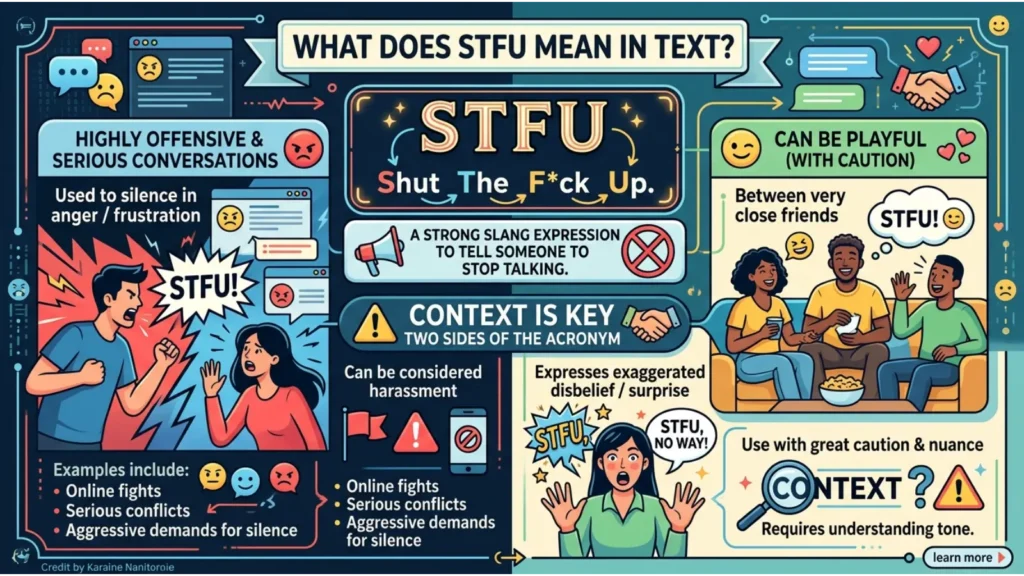
Most of the time, STFU is considered rude and offensive.
However, context makes a huge difference.
It can be offensive when:
- You’re angry.
- You’re arguing.
- You’re insulting someone.
- You’re speaking to strangers.
- You’re talking to teachers, bosses, or family members.
Example:
“STFU. Nobody asked you.”
This is clearly insulting.
It can be playful when:
Very close friends sometimes use STFU jokingly.
Example:
Friend: “I just won free concert tickets!”
Friend: “STFU! Seriously??”
Here, STFU actually means:
“No way! I can’t believe it!”
The tone is excited rather than angry.
What Does STFU Really Mean Depending on Context?
STFU can express several different emotions.
| Context | Meaning |
| Angry argument | Stop talking immediately |
| Joke between friends | You’re kidding! |
| Surprise | I can’t believe it! |
| Gaming | Stop distracting the team |
| Social media | Strong disagreement |
Always read the entire conversation before deciding what the sender means.
Where Is STFU Commonly Used?
You’ll most often find STFU on digital platforms.
Text Messages
Friends may use it jokingly.
Example:
“STFU 😂 That’s the funniest thing I’ve heard today.”
Social Media
People often use STFU in comments or replies.
Example:
“STFU. That movie was amazing.”
Online Gaming
Competitive gamers sometimes use STFU when teammates are distracting them.
Example:
“STFU and focus on the match.”
Group Chats
Friends sometimes say STFU after hearing shocking news.
Example:
“You met your favorite singer?”
“STFU!! No way!”
Memes
Internet memes frequently include STFU as a humorous reaction to unbelievable situations.
Why Do People Use STFU?
People use STFU for different reasons.
Some common reasons include:
- Showing frustration
- Ending an argument
- Expressing shock
- Reacting to unbelievable news
- Teasing close friends
- Making jokes
- Showing excitement
- Creating dramatic reactions online
The meaning depends almost entirely on the relationship between the people involved.
Real-Life Examples of STFU
Here are several examples showing different situations.
Friendly Example
Emma:
“I finally got Taylor Swift tickets.”
Sarah:
“STFU! You’re so lucky!”
Meaning:
“I’m shocked!”
Casual Example
Alex:
“I ate an entire pizza.”
Mike:
“STFU 😂”
Meaning:
“You’re joking!”
Argument Example
Person A:
“You always blame everyone else.”
Person B:
“STFU.”
Meaning:
“Stop talking.”
This sounds hostile.
Gaming Example
Player 1:
“Enemy behind us!”
Player 2:
“STFU and let me hear the footsteps.”
Meaning:
“Please stop talking.”
Social Media Example
Comment:
“STFU. This is the best recipe I’ve ever tried.”
The person is emphasizing excitement rather than insulting someone.
Origin and History of STFU
The phrase “Shut the f*ck up” existed long before the internet.
However, the abbreviation STFU became popular during the early days of:
- Internet forums
- Online chat rooms
- Instant messaging
- Gaming communities
- SMS texting
As character limits became common, people shortened longer phrases into abbreviations.
Today, STFU is recognized worldwide as internet slang.
STFU vs Similar Slang
Many abbreviations have similar meanings but different levels of politeness.
| Slang | Meaning | Rudeness Level |
| STFU | Shut The F*ck Up | Very High |
| GTFO | Get The F*ck Out | Very High |
| IDC | I Don’t Care | Mild |
| IDK | I Don’t Know | Neutral |
| SMH | Shaking My Head | Mild |
| OMG | Oh My God | Neutral |
| LOL | Laugh Out Loud | Friendly |
| BRB | Be Right Back | Neutral |
STFU is one of the strongest abbreviations commonly used online.
When Should You Avoid Using STFU?
Because it contains profanity, there are many situations where STFU is inappropriate.
Avoid using it when talking to:
- Teachers
- Employers
- Customers
- Coworkers
- Parents
- Older relatives
- New friends
- Professional contacts
- Clients
It can easily damage relationships or make you appear disrespectful.
Polite Alternatives to STFU
If you want someone to stop talking without sounding offensive, consider these options.
| Instead of STFU | Try Saying |
| STFU | Please be quiet. |
| STFU | Could you lower your voice? |
| STFU | Let’s hear everyone one at a time. |
| STFU | Give me a second to think. |
| STFU | Can we pause for a moment? |
| STFU | Please let me finish speaking. |
These alternatives communicate the same idea while remaining respectful.
Why Context Matters
One of the biggest mistakes people make is assuming STFU always means anger.
In reality, context changes everything.
Compare these examples:
Angry
“STFU. Nobody cares.”
Clearly offensive.
Excited
“STFU!! You won the lottery??”
Clearly expressing surprise.
The words are identical, but the emotional meaning is completely different.
Impact of Using STFU in Communication
Using STFU can affect conversations in several ways.
Positive Effects
Among close friends, it may:
- Create humor
- Show excitement
- Strengthen casual conversations
- Add dramatic reactions
Negative Effects
It can also:
- Hurt someone’s feelings
- Escalate arguments
- Sound disrespectful
- Create misunderstandings
- Damage professional relationships
Think carefully before sending it.
Is STFU Safe for Social Media?
Technically, yes.
Most social media platforms allow users to type STFU because it is an abbreviation.
However, using it repeatedly for:
- Harassment
- Bullying
- Hate speech
- Threats
may violate community guidelines on some platforms.
Even when allowed, remember that future employers, schools, or family members could see your public posts.
Real-Life Examples in Different Tones
Friendly
“I got promoted!”
“STFU!! That’s amazing!”
Casual
“STFU 😂 You’re hilarious.”
Argumentative
“STFU. You’re wrong.”
Gaming
“STFU and listen for footsteps.”
Social Media
Text Message
Friend:
“I met my celebrity crush.”
You:
“STFU!! Tell me everything!”
Common Misunderstandings About STFU
Many people misunderstand how the abbreviation is used.
Myth 1
STFU is always offensive.
Not always. Close friends sometimes use it playfully.
Myth 2
It is professional slang.
No. It should never be used in professional communication.
Myth 3
Everyone interprets it the same way.
People from different cultures and age groups may see it differently.
Tips for Using STFU Responsibly
If you’re thinking about using STFU, ask yourself:
- Is this person a close friend?
- Will they understand the joke?
- Could they feel insulted?
- Is this conversation professional?
- Would a kinder phrase work better?
When in doubt, choose a more polite expression.
Key Takeaways
- STFU means “Shut the Fuck Up.”
- It is a vulgar and highly informal texting abbreviation.
- It can express anger, annoyance, disbelief, or playful shock.
- Friends may use it jokingly, but strangers may see it as an insult.
- The surrounding conversation and tone help reveal its intended meaning.
- Use polite alternatives in professional or formal situations.
Frequently Asked Questions
What does STFU mean in texting?
STFU usually means “Shut the Fuck Up.” It is a vulgar way to tell someone to stop talking, although friends sometimes use it jokingly to express surprise or disbelief.
Is STFU a bad word?
STFU contains the profanity “fuck,” so it is considered vulgar language. Whether it feels seriously offensive depends on the context and relationship between the people using it.
Does STFU mean shut up?
Yes. STFU is an abbreviated and more vulgar version of “shut up.” It generally sounds stronger because it includes profanity.
Is STFU rude?
Yes, especially when used seriously toward someone. Among close friends, it can sometimes be playful or humorous.
What does STFU mean from a girl?
It has the same basic meaning regardless of who sends it. A girl might use STFU seriously, jokingly, or as a reaction to something surprising. The surrounding conversation determines the tone.
What does STFU mean from a guy?
It also means “Shut the Fuck Up.” A guy may use it to show annoyance, but friends can also use it casually as a joking reaction.
Can STFU be used jokingly?
Yes. For example, “STFU 😂” can mean something like “No way!” or “You’re kidding!” between friends. However, not everyone will understand it as a joke.
What is a polite alternative to STFU?
Depending on the situation, you can say “Please be quiet,” “Can I finish?” “Please stop,” or “Could you let me speak?” These options avoid profanity and sound more respectful.
Conclusion
Understanding the STFU meaning in text helps you interpret online conversations more accurately. While STFU stands for “Shut The F*ck Up,” its meaning changes depending on context. In arguments, it is usually offensive and should be avoided. Among close friends, however, it can sometimes express excitement, disbelief, or playful humor.
Before using STFU, think about your audience, your relationship with the other person, and the setting. When communicating with coworkers, teachers, clients, or anyone you don’t know well, polite alternatives are almost always the better choice. Knowing when—and when not—to use internet slang makes your online communication clearer, more respectful, and more effective.

Dave Barry is a slang and modern language writer who explains internet terms, texting abbreviations, and social media phrases in a simple way. He creates easy-to-understand guides on trending slang, online expressions, and digital communication. His writing helps readers quickly understand modern English used in chats and social platforms. At Meanifiy, Dave Barry shares fun and informative slang meaning content for everyday readers.